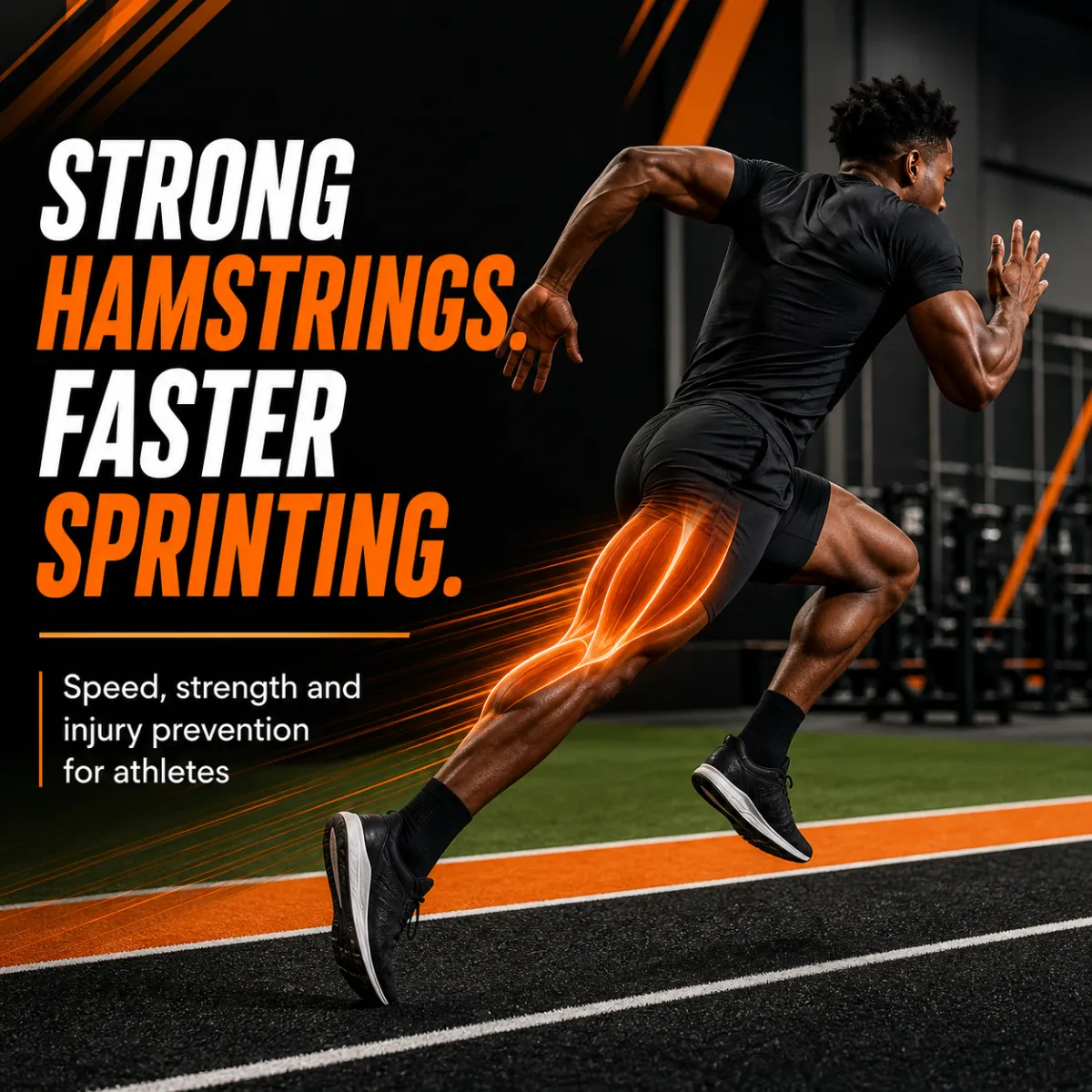
Hamstring Strength and Sprint Performance: Why Fast Athletes Need Strong Hamstrings
Hamstring Strength and Sprint Performance: Why Fast Athletes Need Strong Hamstrings
Speed is one of the most valuable qualities in sport. Whether you are a sprinter chasing a personal best, an AFL player breaking into space, a rugby player accelerating through contact, or a soccer player pressing, turning and sprinting behind the defence, your hamstrings play a major role.
The hamstrings are not just “the muscles at the back of your leg”. They help extend the hip, bend the knee, control the leg during high-speed running and absorb force when your foot hits the ground. For athletes, strong hamstrings are closely linked with sprint performance, acceleration, repeat sprint ability and injury prevention.
At Pivot Sports Performance, we work with athletes who want to get faster, stronger and more resilient through structured strength and conditioning, sports physiotherapy and athlete performance training.
Hamstring injuries are also one of the biggest problems in running-based sports. The AFL reported that hamstring strains had the highest incidence of all injury categories in the 2023 AFL season, with an average of 4.71 injuries per club and 14.34 missed matches per club. Rugby Union research has also found hamstring strains are one of the most common injuries in the sport, representing up to 15% of all injuries.
For athletes, this means one thing: if you care about speed, availability and performance, you need to care about hamstring strength.
Why Hamstrings Matter for Sprinting
During sprinting, the hamstrings work extremely hard, especially as the leg swings forward and prepares to strike the ground. At high speed, the hamstrings must lengthen and produce force at the same time. This is called eccentric strength.
This matters because sprinting is not just about moving your legs quickly. Fast athletes need to apply large amounts of force into the ground in a very short time. The hamstrings help create hip extension, control the lower leg, stabilise the pelvis and support efficient running mechanics.
In track sprinting, this is obvious. The athlete who can apply more force, maintain better positions and tolerate high-speed running loads is often better placed to sprint faster. But the same idea applies in field sports. AFL, rugby and soccer athletes do not just run in straight lines. They accelerate, decelerate, kick, tackle, jump, land, change direction and sprint repeatedly under fatigue.
That is why hamstring strength should be part of any serious athlete performance training program for sprinters and field-based athletes.
The Link Between Hamstring Strength and Injury Prevention
Hamstring injuries usually happen when the demands of sprinting exceed what the athlete’s body can tolerate. This is why gym strength, sprint exposure and load management all matter.
A major review in the British Journal of Sports Medicine found that running, match-play demands and hamstring strength are likely important factors when assessing hamstring injury risk in sport. AFL performance coaches also report that accelerations, maximum-speed sprinting and running with hip flexion are common activities linked with hamstring strain injuries. These coaches viewed sprinting, eccentric hamstring strength training and good periodisation as useful strategies to reduce hamstring injury risk.
This is important because many athletes try to prevent hamstring injuries by avoiding sprinting. That can backfire. If an athlete never sprints at high speed in training, then match day becomes the first exposure to true sprint intensity. That is a problem.
The goal is not to avoid speed. The goal is to prepare for it.
Athletes coming back from injury may also benefit from a more structured return-to-sport process. Our guide on hamstring strain rehabilitation explains how strength progressions, sprint mechanics and return-to-play testing can help athletes return with more confidence.
What About Nordic Hamstring Exercises?
The Nordic hamstring exercise is one of the most researched hamstring injury prevention exercises. It trains eccentric knee flexor strength, which is useful for athletes who sprint, kick and change direction.
Research has shown that injury prevention programs including Nordic hamstring exercises can reduce hamstring injury risk in soccer players. Another review found that including the Nordic hamstring exercise in prevention programs can significantly reduce the rate of hamstring injuries.
That does not mean every athlete only needs Nordics. In AFL, rugby, soccer and sprinting, hamstring development should be more complete. Athletes need knee-dominant strength, hip-dominant strength, sprint exposure and sport-specific running mechanics.
A good gym program may include exercises such as Nordic hamstring curls, Romanian deadlifts, hip thrusts, glute ham raises, hamstring sliders, single-leg RDLs, sprint drills, acceleration work and maximum-velocity sprinting.
The best program depends on the athlete’s sport, training age, injury history and current strength profile. That is why we use a full athlete development model through our Athletic Performance Program, rather than giving every athlete the same generic gym plan.
Sprint Training Is Hamstring Training
One mistake athletes make is separating sprint training and strength training too much. The gym builds the capacity. Sprinting teaches the body how to use that capacity at speed.
For a soccer player, this might mean repeated accelerations and flying sprints. For an AFL player, it might mean high-speed running exposure, curved runs, kick-chase patterns and repeat sprint efforts. For a rugby player, it might mean acceleration into contact, chase efforts and defensive line speed. For a track sprinter, it might mean technical acceleration, max velocity work and speed endurance.
High-speed running needs to be introduced carefully. Too little exposure can leave athletes underprepared. Too much too soon can increase risk. In football and field sports, recurrent hamstring injuries are often linked to poor load management and strength deficits. A structured strength and conditioning program can help reduce this risk.
This is where strength and conditioning becomes valuable. A good coach does not just make athletes tired. They build speed, strength and tissue capacity in a planned way.
Why Field-Based Athletes Need Gym-Based Hamstring Strength
Field sport athletes often think sprinting at training is enough. It is not.
Sport gives you exposure to speed, but it does not always give you targeted strength development. You may sprint often, but still have poor eccentric hamstring strength, poor single-leg control, weak hip extension or a strength imbalance from side to side.
This is why structured strength and conditioning for athletes is important. A gym program gives athletes the chance to build qualities that sport alone may not address.
For example, a soccer winger needs hamstring strength to sprint repeatedly and decelerate after pressing. An AFL midfielder needs hamstring capacity to tolerate high-speed running, kicking and repeat efforts. A rugby outside back needs acceleration, top speed and the ability to sprint under fatigue. A sprinter needs high levels of force, stiffness, coordination and hamstring resilience at maximum speed.
Different sports have different demands, but they all need strong hamstrings.
For footballers specifically, we have also written about lower body strength for football performance, including how strength training can support speed, power, contest work and injury prevention.
The Pivot Approach
At Pivot Sports Performance, hamstring strength is not treated as a single exercise or a quick warm-up drill. It sits inside a complete athlete development system.
That means we look at strength, sprint mechanics, training load, injury history, testing data and sport demands. From there, we can build a plan that helps the athlete move faster, train harder and reduce their risk of missing sport through injury.
For some athletes, the priority is eccentric hamstring strength. For others, it is sprint exposure. Some need better acceleration mechanics. Others need better gym programming with other lower body muscles/tendons, better recovery, or a smarter weekly training structure.
If you are currently dealing with a hamstring injury, our sports physiotherapy team in Bundoora and sports physiotherapy team in Ringwood can help guide your rehab and return-to-sport plan.
If your goal is to get faster, stronger and more resilient, our strength and conditioning program can help you build the physical qualities needed for your sport.
The key message is simple.
If you want to sprint faster, stay on the field and perform better, your hamstrings need to be strong, prepared and exposed to speed regularly.
Fast athletes do not just run fast. They build the body that allows them to run fast.
