The Physiology of Strength Training: Why Results Take Time
The Physiology of Strength Training: Why Results Take Time
If you’ve ever started strength training and expected fast results, you’re not alone. Most people want to get stronger, build muscle, and feel better as quickly as possible. But the reality is this:
Your body changes slower than your motivation.
Understanding how your body adapts, and where you sit in your training journey, can help you stay patient, consistent, and on track.
What Happens When You Strength Train?
When you lift weights or do resistance training, your body is forced to adapt to stress.
This stress creates small changes in your muscles and nervous system. Over time, these changes make you stronger.
There are two main systems involved:
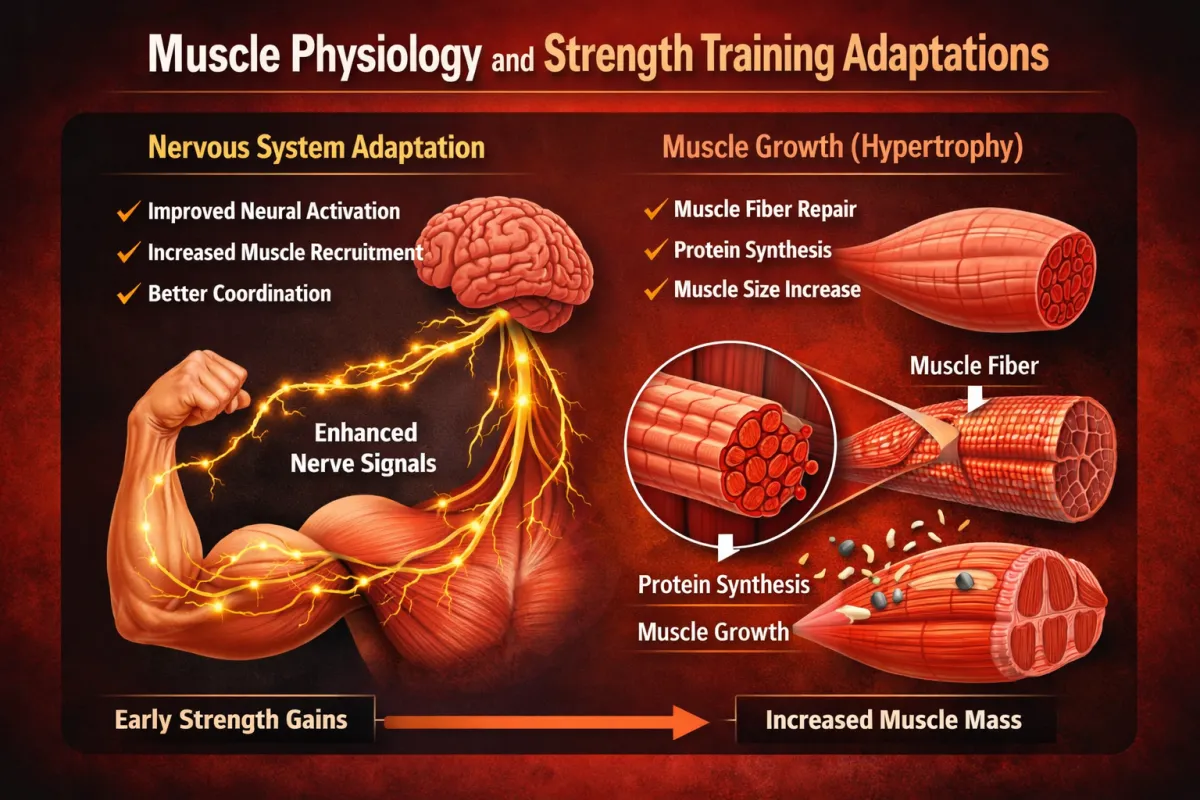
1. Your Nervous System (Early Gains)
Your brain and nerves learn how to use your muscles better.
You recruit more muscle fibres
Your coordination improves
You become more efficient at movements
This is why beginners often feel stronger quickly (often well before muscles grow).
2. Your Muscles (Long-Term Growth)
Your muscle fibres increase in size. This is called hypertrophy.
Muscle fibres repair and grow after training
Protein builds new tissue
Muscles become thicker and stronger
This process takes longer than nervous system changes.
Training Experience Levels (And What They Mean)
Your rate of progress depends heavily on how long you’ve been training.
Beginner (0–12 months of consistent training)
Fastest progress phase
Rapid strength gains
Muscle growth happens relatively quickly
What to expect:
Strength increases within 2–4 weeks (Nervous System Changes)
Visible muscle changes as early as 6–8 weeks
Can gain ~0.5–1 kg of muscle per month
This is often called “newbie gains”
Intermediate (1–3 years of consistent training)
Progress slows compared to beginner phase
Requires more structured programming and increased variability
What to expect:
Strength gains become slower and harder earned
Muscle growth ~0.25–0.5 kg per month
Plateaus become more common
You now need better programming, more variety, recovery principles, and nutrition to keep improving.
Advanced (3+ years of consistent training)
Very slow progress
Small improvements take a long time
What to expect:
Strength gains are minimal but meaningful
Muscle growth is very slow (~0.1–0.25 kg per month)
Progress measured in months or years
We will attempt to fine tune lifts
High levels of variability within the program to allow for constant nervous system adaptations
At this stage, precision (through strength-power testing) matters more than effort.
How Long Does It Take to Get Stronger?
Weeks 1–3: Learning Phase
Strength increases quickly
Mostly due to nervous system improvements
Technique improves
What you’ll notice:
Lifts feel easier
Better control of movements
Not much visible muscle change
Weeks 4–8: Early Adaptation
Strength continues to improve
Muscle growth begins (but still small)
What you’ll notice:
Slight increases in muscle size
Clothes may feel a bit tighter
Improved endurance in training
Weeks 8–12: Visible Progress
Muscle growth becomes more noticeable
Strength gains continue steadily
What you’ll notice:
Clear physical changes
Increased confidence in lifts
Better recovery between sessions
6–12 Months: Real Transformation
Significant strength improvements
Measurable muscle growth
What you’ll notice:
Visible muscle definition
Bigger changes in body shape
Higher performance in sport or training
How Long Does It Take to Build Muscle?
Muscle growth is slower than most people expect, and depends on your experience level:
Beginner: ~0.5–1 kg/month
Intermediate: ~0.25–0.5 kg/month
Advanced: ~0.1–0.25 kg/month
The longer you train, the harder it is to gain more muscle.
Why Results Feel Slow (But Aren’t)
There are a few reasons people think strength training “isn’t working”:
1. Changes Are Happening Internally First
Your body is improving before you can see it.
2. Muscle Growth Is a Slow Process
Your body builds muscle in small amounts over time—not overnight.
3. Inconsistency Slows Progress
Missing sessions or poor nutrition delays results.
Setting Realistic Expectations
If you want to succeed with strength training, you need to shift your mindset:
Unrealistic Expectations
“I want to see results in 2 weeks”
“I should look completely different in a month”
Realistic Expectations
Strength improves in 2–4 weeks
Visible muscle changes in 6–12 weeks
Major transformation in 6 months+
What Actually Drives Progress?
To get results, focus on these key areas:
1. Consistency
Train regularly (2–4 times per week minimum).
2. Progressive Overload
Gradually increase weight, reps, or difficulty.
3. Nutrition
Eat enough protein and calories to support growth.
4. Recovery
Sleep and rest are where growth actually happens.
5. Variety
Keep the nervous system adapting.
The Bottom Line
Strength training works. But it works on a timeline.
Your nervous system adapts first
Your muscles grow later
Your experience level determines your rate of progress
Visible results take weeks to months, not days
Physical qualities decline. You will lose it unless you use it. (our blog on reversibility of training is a must read).
Final Thought
Most people quit just before results become visible.
If you can stay patient and commit to the process, you’ll separate yourself from 90% of people who give up too early.
