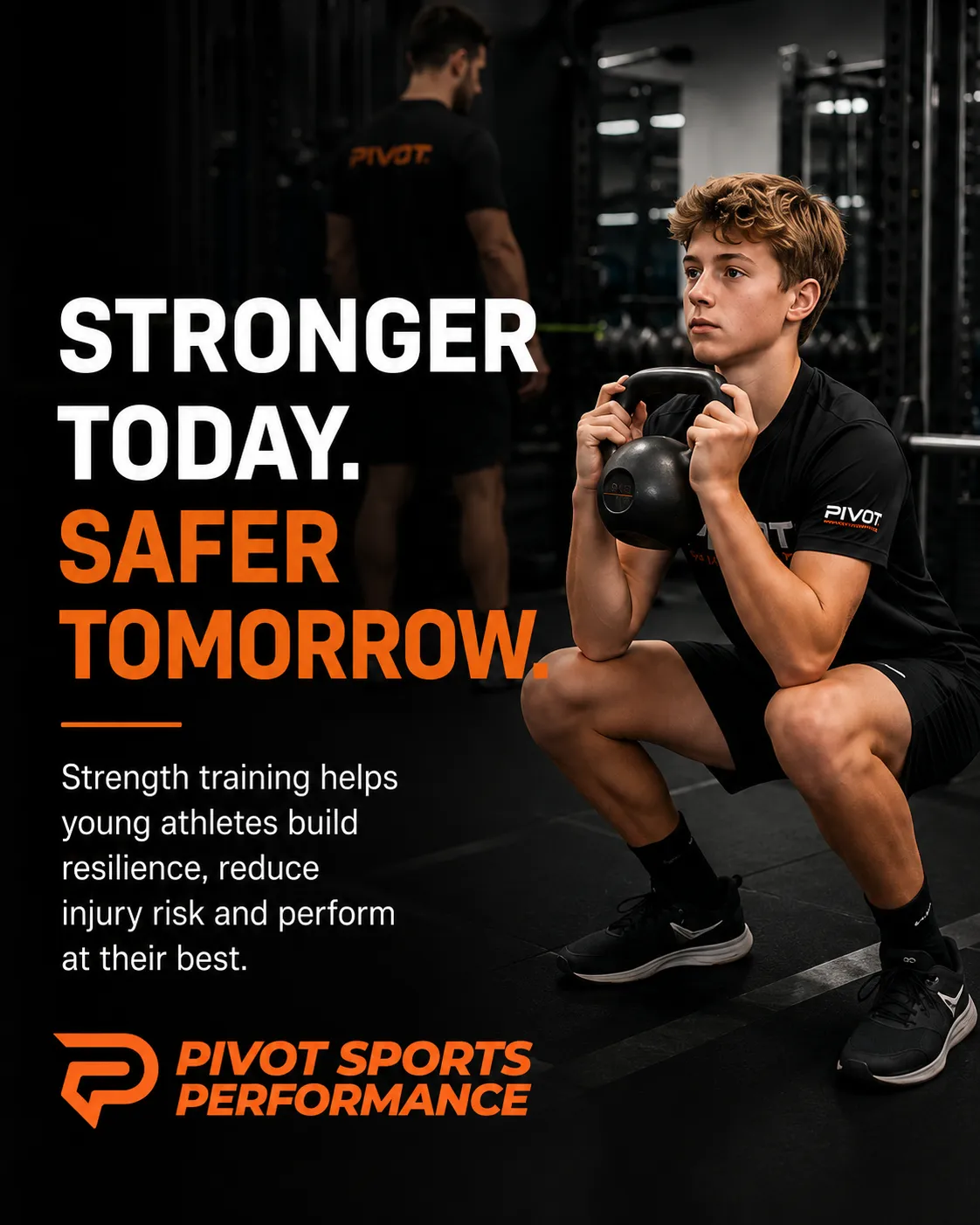
Why Strength Training Is One of the Best Injury Prevention Tools for Young Athletes
Why Strength Training Is One of the Best Injury Prevention Tools for Young Athletes
Every parent wants their child to enjoy sport, stay active and build confidence.
But there is one thing that can quickly take that away.
Injury.
A rolled ankle. A sore knee. A hamstring strain. Back pain. A shoulder issue. A growth-related injury that keeps coming back. For a young athlete, injury can be frustrating, scary and confusing. One week they are training well, playing with confidence and enjoying sport. The next week they are on the sideline watching their teammates play.
This is where strength training matters.
For a long time, strength training for kids and teenagers was misunderstood. Some people believed young athletes should avoid the gym. Others thought strength training was only for older athletes, elite athletes or kids trying to “bulk up”.
We now know that is not the case.
When it is coached properly, strength training can be one of the best tools for helping young athletes move better, tolerate more training, reduce injury risk and improve their performance.
At Pivot Sports Performance, we see this every week across our Bundoora and Ringwood facilities. Young athletes do not just need more sport. They need better preparation for sport.
Young athletes are under more load than ever
Many young athletes now play multiple sports, train several nights per week, attend school sport, play club sport, trial for representative teams and still try to keep up with school and social life.
That is a lot of load for a growing body.
The issue is not that young athletes are playing sport. Sport is a great thing. The issue is that many young athletes are exposed to sprinting, jumping, landing, tackling, kicking, throwing and changing direction without having the physical base to tolerate it.
This is where injuries can start to build.
A young soccer player might sprint and change direction hundreds of times per week. A basketballer might jump and land repeatedly. A footballer might accelerate, decelerate, tackle and absorb contact. A netballer might stop, land, pivot and re-accelerate under pressure.
These actions are not bad. They are part of sport.
But if the athlete does not have enough strength, control, coordination and tissue capacity, their body may struggle to handle the demands.
Strength training helps build that capacity.
Strength training is not just lifting heavy weights
When parents hear “strength training”, they often picture heavy barbells, bodybuilding or adult gym programs.
That is not what good youth strength and conditioning should look like.
For young athletes, strength training should be structured, supervised and age-appropriate. It should include:
Squatting patterns
Hip hinge patterns
Lunging and single-leg control
Pushing and pulling
Core strength
Landing mechanics
Balance and coordination
Sprint preparation
Jumping and deceleration skills
Gradual exposure to safe resistance
The goal is not to turn young athletes into powerlifters.
The goal is to help them become stronger, more coordinated and more resilient athletes.
A good program teaches young athletes how to move well first. From there, load can be added gradually when the athlete is ready.
The National Strength and Conditioning Association youth resistance training position statement supports properly designed and supervised resistance training for children and adolescents. Their position statement highlights that youth resistance training can be safe and beneficial when it is appropriately coached.
How strength training helps reduce injury risk
Injury prevention is never about one magic exercise.
It is about improving the athlete’s ability to handle the demands of sport.
Strength training can help reduce injury risk in several ways.
1. It improves tissue capacity
Muscles, tendons, bones and joints all respond to load.
When athletes train properly, their body adapts. Tendons can become better at tolerating force. Muscles can produce and absorb force more effectively. Bones can become stronger. Joints can become more stable through better strength and control.
This matters because sport is full of force.
Every sprint, jump, landing and change of direction places stress on the body. If an athlete’s tissues are not prepared for that stress, injury risk may increase.
Strength training helps close the gap between what sport demands and what the athlete’s body can tolerate.
2. It improves landing and deceleration
Many injuries happen when an athlete is trying to slow down, land or change direction.
This is especially important in sports like football, netball, basketball, soccer and rugby.
A young athlete may be fast enough to get into a contest, but not strong enough to control their body when they stop or land. That is where knees, ankles, hips and backs can be placed under extra stress.
Strength and conditioning teaches athletes how to absorb force.
They learn how to land, brake, stabilise and re-accelerate. These skills are not just useful for injury prevention. They are also important for performance.
The athlete who can slow down well can often change direction better.
Athletes who want to improve these qualities can benefit from structured speed and agility training that teaches them how to accelerate, decelerate and move with more control.
3. It builds single-leg strength
Most sport happens on one leg.
Sprinting is a repeated single-leg action. Kicking happens on one leg. Cutting happens off one leg. Landing often happens on one leg. Even tackling and contact situations often require single-leg control.
If a young athlete has poor single-leg strength, they may compensate.
They might collapse at the knee, shift their weight, overuse one side, lose balance or struggle to control force.
Single-leg strength training helps athletes become more stable, powerful and controlled during sport-specific actions.
4. It helps reduce overuse injuries
Not all injuries happen suddenly.
Some injuries build slowly over time. These are often called overuse injuries.
Examples may include:
Knee pain
Heel pain
Shin pain
Tendon pain
Back pain
Hip pain
Shoulder irritation
These injuries often happen when the athlete is doing more than their body is ready for.
Strength training can help by improving load tolerance and spreading stress more evenly across the body.
For example, a young runner with weak calves may overload their shins or Achilles. A footballer with poor hip strength may place more stress on their knees. A basketballer with poor landing mechanics may overload their ankles or patellar tendon.
The aim is not just to treat pain once it appears.
The aim is to build the athlete’s body so they are better prepared before problems start.
For athletes already dealing with pain or recurring injuries, our sports physiotherapy team in Bundoora and sports physiotherapy team in Ringwood can help assess the issue and guide a safe return to sport.
5. It improves confidence
Injury prevention is not only physical.
Confidence matters.
A young athlete who feels weak, unstable or unsure may hesitate during sport. They might avoid contact, pull out of contests or move differently because they do not trust their body.
Strength training helps athletes feel more capable.
They start to notice they can jump better, sprint harder, hold position, absorb contact and move with more control. This confidence can change how they play.
For many young athletes, feeling strong is just as important as being strong.
Strength training also improves performance
The best part about strength training is that injury prevention and performance are not separate goals.
A stronger athlete is often a better-prepared athlete.
Strength training can support:
Faster acceleration
Better sprint mechanics
Stronger jumping
Better landing
Improved change of direction
Better contact tolerance
Improved running efficiency
Greater confidence during competition
This is why strength and conditioning is not just something athletes should do after they get injured.
It should be part of their normal development.
At Pivot Sports Performance, our speed and agility training is designed for competitive athletes in Bundoora and Ringwood who want to become faster, more evasive and better prepared for the demands of team sport.
What does the research say?
The Australian Sports Commission states that resistance training in at-risk youth athlete populations has been shown to reduce injury risk by up to 68%, while also improving sport performance, health measures and physical literacy.
That is important because it shifts the conversation.
The question should not be, “Is strength training dangerous for young athletes?”
The better question is, “Is it risky for young athletes to play high-speed, high-impact sport without being physically prepared?”
The Australian Institute of Sport position statements also provide evidence-based guidance across sport science and sports medicine, which makes them a useful authority for Australian sport organisations, coaches and parents.
The key point is this: strength training needs to be coached well.
Poor training can create problems. Good training can solve them.
When should young athletes start strength training?
Young athletes can start strength training when they are ready to listen, learn and be coached.
The starting point should not be based only on age.
It should be based on:
Maturity
Coordination
Training history
Sport demands
Injury history
Ability to follow instructions
Quality of coaching
For some athletes, this might start with bodyweight exercises, balance, landing, jumping and basic movement control.
For others, it may include more structured gym-based strength work.
The program should match the athlete.
That is why copying random social media workouts is not ideal. A 13-year-old basketballer, a 15-year-old footballer and a 17-year-old sprinter do not all need the same program.
Their training should reflect their sport, body, injury history and goals.
For more information on this topic, read our article on when kids should start strength training.
The biggest mistake parents make
The biggest mistake is waiting until the athlete is injured before starting strength and conditioning.
Many young athletes only come into a gym after something goes wrong.
They hurt their knee. They strain a hamstring. They roll their ankle again. They develop back pain. They lose confidence after a growth spurt.
Rehab is important, but prevention is better.
A well-planned strength and conditioning program can help identify weaknesses before they become injuries. It can also prepare the athlete for the next level of sport.
This is especially important when athletes move from junior to senior sport, school to representative sport, or local competition to higher-level competition.
The speed, strength and intensity of the game often increases.
The athlete needs to be ready.
What should a good youth athlete program include?
A good program should be more than just random exercises.
It should include assessment, coaching, progression and testing.
At Pivot Sports Performance, we use testing to understand where the athlete is starting from. This helps guide their training and gives them a clear plan.
A good youth strength and conditioning program should include:
Movement quality
Can the athlete squat, hinge, lunge, land, jump and change direction with control?
Strength
Does the athlete have enough strength for their sport, age and training level?
Single-leg control
Can they control force on one leg during landing, cutting and running?
Speed exposure
Are they prepared for sprinting, acceleration and high-speed running?
Conditioning
Can they tolerate the running demands of their sport?
Recovery habits
Are they sleeping, eating and recovering well enough to adapt?
Confidence
Does the athlete trust their body during sport?
When these areas are trained together, the athlete becomes more robust.
Why local athletes in Bundoora and Ringwood need this
Young athletes in Bundoora, Ringwood and surrounding suburbs are often playing sport across multiple environments.
They may be involved in school sport, club sport, representative teams, private coaching and extra fitness sessions.
That can be a great opportunity, but it can also become messy if no one is managing the full picture.
A young athlete may have:
Club training twice per week
A game on the weekend
School sport
Extra running
Skills coaching
Gym work
Trial periods
Representative commitments
Without a plan, load can build quickly.
This is where a structured strength and conditioning program can help. It gives the athlete a base. It helps parents understand what the athlete needs. It helps reduce guesswork.
At Pivot Sports Performance, we provide strength and conditioning, sports physiotherapy in Bundoora, sports physiotherapy in Ringwood, concussion management and recovery services as part of a complete sports performance system.
Strength training is not replacing sport
Some parents worry that gym training will take away from sport.
It should not.
The goal of strength training is to support sport, not replace it.
A good program should help the athlete train and play better. It should not leave them exhausted, sore and unable to perform.
This is where coaching matters.
Young athletes do not need to be smashed in the gym. They need to be progressed.
They need the right amount of challenge at the right time.
Final thoughts
Strength training is one of the best tools young athletes can use to reduce injury risk and improve performance.
It helps them build stronger muscles, tendons and bones. It improves landing, sprinting, change of direction and single-leg control. It helps them move with more confidence. It also teaches them how to train properly, which is a skill they can use for the rest of their sporting life.
For parents, the message is simple.
Do not wait until your child is injured before they start preparing their body for sport.
If your child is serious about sport, wants to stay injury-free, or is already dealing with repeated niggles, a structured strength and conditioning program can make a major difference.
At Pivot Sports Performance, we help young athletes in Bundoora and Ringwood build the strength, confidence and physical capacity they need to perform.
Book an assessment
If your child is dealing with repeated injuries, struggling with confidence, or wants to take their sport more seriously, book an assessment with Pivot Sports Performance.
Our team can assess their current strength, movement, injury history and sport demands, then create a plan that helps them train smarter and perform better.
Book a sports physiotherapy or athlete performance assessment at Pivot Sports Performance.
FAQ
Is strength training safe for young athletes?
Yes, when it is properly coached and supervised. Young athletes should follow a structured program that matches their age, ability, sport and training history.
What age should kids start strength training?
There is no perfect age for every athlete. A young athlete can start when they are mature enough to follow instructions, learn good technique and train in a supervised environment.
Does strength training stunt growth?
No. This is an outdated myth. Properly designed and supervised resistance training is supported by major strength and conditioning organisations.
Can strength training help prevent injuries?
Yes. Strength training can help improve tissue capacity, movement control, landing mechanics and single-leg strength. The Australian Sports Commission reports that resistance training in at-risk youth populations has been shown to reduce injury risk by up to 68%.
Should young athletes lift heavy weights?
Some young athletes may eventually lift heavier weights, but only when they have earned the right to do so. Technique, control and progression come first.
Is strength training useful for team sport athletes?
Yes. Team sport athletes need strength for sprinting, jumping, landing, changing direction, contact and repeat efforts. Strength training can support both performance and injury prevention.
