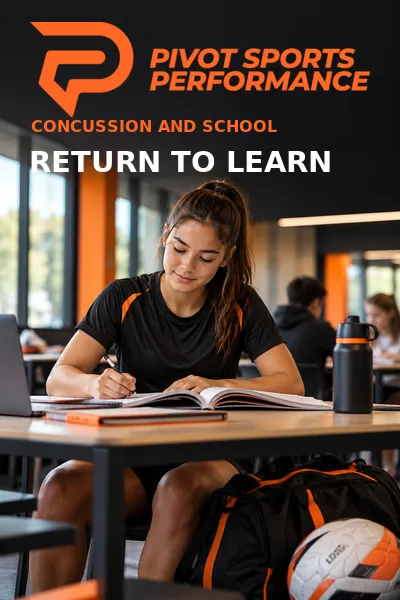
Concussion and School in Melbourne: A Return-to-Learn Guide for Student Athletes
Concussion and School in Melbourne: A Return-to-Learn Guide for Student Athletes
A student-athlete takes a head knock on the weekend. By Monday they look fine, but a bright classroom, a laptop screen and twenty minutes of reading bring back a headache and mental fog. With assignments due or VCE exams approaching, the family faces two pressures at once: protect recovery and keep school moving.
That situation is not a test of toughness or motivation. Concussion can affect concentration, memory, vision, balance, sleep, mood and tolerance for busy environments. A safe concussion return to school in Melbourne is usually a gradual process, guided by symptoms and coordinated between the student, family, school and treating health professionals.
This guide explains the general return-to-learn process. It cannot diagnose concussion or provide individual clearance. If concussion is suspected, remove the athlete from sport, do not allow same-day return, and arrange appropriate medical assessment.
Why return to learn matters
School is not simply something to wait out until every symptom disappears. Current Australian concussion guidance and the international consensus on sport-related concussion support a short period of relative rest followed by a gradual increase in cognitive and physical activity, as tolerated.
Return to learn means rebuilding the student’s capacity for reading, screens, classroom noise, note-taking, homework, tests and a full school day. The Royal Children’s Hospital Melbourne recommends a staged school return and advises that children and adolescents complete a successful return to school before returning to sport.
For many students, recovery is straightforward. Others need temporary adjustments, particularly when headaches, dizziness, fatigue, light sensitivity, slowed thinking or concentration difficulties are triggered by schoolwork. The plan should respond to the individual rather than a fixed calendar.
First, check safety and arrange assessment
A concussion can follow a direct blow to the head, face or neck, or a force to the body that transmits to the head. Loss of consciousness is not required. Symptoms can be immediate or develop over the following hours.
Seek urgent medical attention or call triple zero (000) if the student is unconscious, very hard to wake, has a seizure, keeps vomiting, develops severe or worsening headache, increasing confusion, slurred speech, weakness or numbness, significant neck pain, double vision, or rapidly worsening symptoms. Do not use an online checklist to decide that a serious head injury is only concussion.
Even without emergency signs, a student with possible concussion symptoms should be assessed by an appropriately qualified health professional. A clear clinical plan also gives the school reliable information about what the student can currently manage. For acute practical steps, read what to do in the first 48 hours after sports concussion.
A practical four-stage return-to-learn pathway
1 Relative rest for the first 24 to 48 hours
Relative rest is not strict isolation in a dark room. It usually means reducing activities that clearly worsen symptoms while allowing calm daily activity, adequate sleep, regular meals and gentle movement such as walking when medically appropriate. Screens, gaming, study and noisy environments may need to be limited early if they aggravate symptoms.
The student should avoid contact sport and activities with a risk of another head impact. Follow the advice provided after medical assessment, because age, symptoms, previous concussions and other health factors can change the plan.
2 Light school activity at home
After the initial relative-rest period, a student can often trial short blocks of light cognitive work. This may start with five to fifteen minutes of reading, simple homework or a quiet online task, followed by a break. The goal is not to complete the normal workload immediately. It is to learn what amount of thinking the student can tolerate and then build from there.
The Amsterdam concussion consensus statement describes progression as symptom-limited. A mild and brief increase in symptoms can occur, but a larger or prolonged flare means the load should be reduced and the treating clinician may need to review the plan. Students and families should not turn this into a pass-fail self-test.
3 Return to school part time with adjustments
The next step may be a shorter day, selected classes or a quiet arrival time. A student who can read at home for twenty minutes may still struggle with fluorescent lighting, corridor noise, rapid note-taking and the social load of a full school day. That difference is useful information, not a setback.
Helpful temporary adjustments can include:
shorter school days or a reduced timetable
scheduled rest breaks in a quiet space
printed work or reduced screen brightness when screens aggravate symptoms
extra time for tasks and fewer tasks completed in one sitting
teacher notes or permission to pause note-taking
delayed quizzes, tests or assignment deadlines
reduced homework while attendance is being rebuilt
permission to avoid noisy assemblies, practical classes or busy lunch areas for a short period
one nominated school contact to keep the plan consistent.
Adjustments should be reviewed as the student improves. The aim is a supported return to normal participation, not an open-ended exemption from learning.
4 Build to a full school day and normal academic load
School time, subject complexity, homework and assessments can increase gradually. Progress is appropriate when the current level causes no more than a mild, short-lived symptom increase and the student returns to their previous baseline before the next load. If symptoms become moderate, last into the next day or repeatedly stop progression, seek clinical review.
A return-to-learn plan works best when everyone uses the same message. The student should not be told to push through by one adult and stop all activity by another. A short written plan from the treating health professional can clarify current tolerances, adjustments and review dates for teachers and coordinators.
What if concussion happens during VCE exam season?
Timing matters in Melbourne this month. The VCAA 2026 examination timetable shows performance and oral assessments across October, with the main written examination period beginning on 27 October. A student who sustains a concussion near an assessment should tell their VCE coordinator as soon as possible.
VCAA states that schools may apply for Emergency Special Examination Arrangements when a sudden illness, accident or personal trauma occurs immediately before or during the assessment period, supported by appropriate evidence. A student significantly affected at the time of an external assessment may also be eligible for a Derived Examination Score, subject to the official criteria and evidence requirements. Read the current VCAA Special Provision guidance and work through the school rather than assuming an arrangement is automatic.
Parents should keep relevant assessment records and ask the clinician what documentation the school needs. Students should follow medical advice about attendance. If they are able to attend but remain affected, the VCE coordinator and exam supervisor should be informed according to VCAA instructions.
How school and sport fit together
Return to learning and return to sport can progress alongside each other at lower-risk stages, but full return to school should come before unrestricted return to sport. Feeling comfortable in a quiet room is not the same as tolerating a full day of classes, training decisions and contact risk.
For Australian youth and community sport, the national framework uses a conservative process. Athletes under 19 and community athletes should be symptom-free at rest for at least 14 days before contact or collision training and should not return to competitive contact sport before day 21. These are minimum conditions, not automatic clearance. Sport-specific rules and medical clearance still apply. Read why 21 days is not automatic clearance for the full return-to-sport explanation.
When recovery needs another look
Seek earlier review if symptoms worsen, new symptoms appear or the student cannot progress without a substantial flare. The Royal Children’s Hospital advises GP review when a child still needs support to return to everyday activities after two weeks. The international consensus recommends multimodal assessment and referral when symptoms persist, worsen or are not progressively resolving over two to four weeks.
Ongoing difficulty may involve several domains, including headache, neck function, balance, eye movements, vestibular function, sleep, mood, exercise tolerance or learning needs. That is why one symptom score, computer test or baseline result cannot diagnose recovery or clear a student by itself. Baseline testing may provide useful context, but it is only one part of a broader clinical assessment.
How Pivot can support a coordinated return
Pivot Sports Performance provides concussion management in Melbourne for athletes and families in Bundoora and Ringwood. Depending on the assessment and the professionals involved, support may include symptom monitoring, neck and vestibular assessment, graded exercise, communication about return-to-learn needs, and progression back towards training. Medical diagnosis and clearance remain with appropriately qualified practitioners.
If a student-athlete is struggling to balance concussion recovery, school and sport, book a concussion assessment or contact the Pivot team to discuss the appropriate next step. Bring the injury timeline, current symptoms, school demands and any upcoming assessments so the plan reflects the student’s real week.
