How to Structure a Running Week (with Juy's Christmas Challenge as the Example)
How I’m Training to Beat My Partner at Christmas Park Run (and How You Can Structure Your Week to Run Faster Too)
Every couple has their thing. Some cook together. Some binge Netflix. Some adopt plants they definitely can’t keep alive.
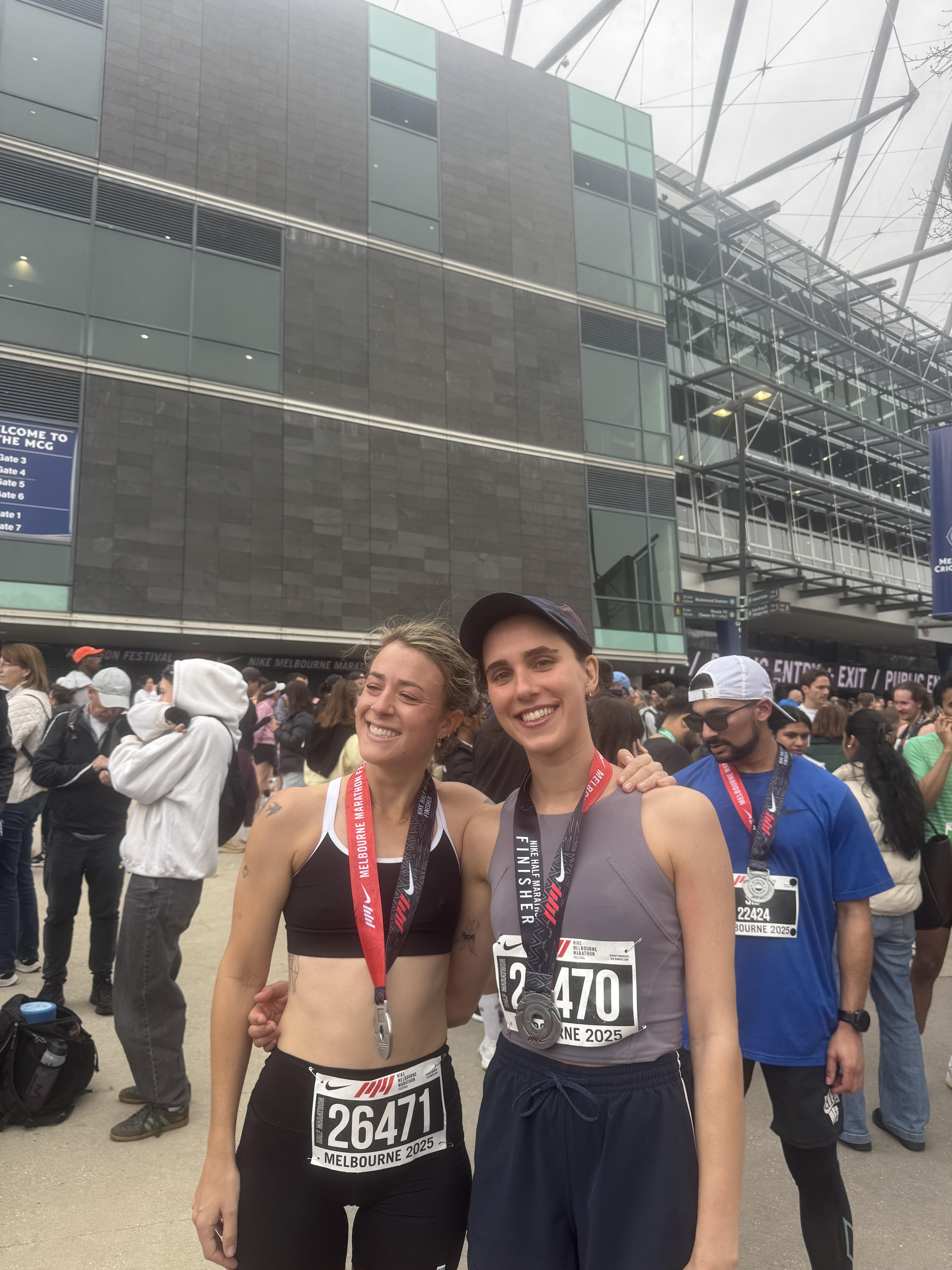
Ours? Christmas Day Park Run at Albert Park.
And every single year, my partner smokes me. Not politely. Not gently. She absolutely runs away with it. The worst part? She doesn’t even talk trash. She waits until the finish line, gives me a smile, and says, “Good job, you looked strong running.”
That smile has haunted me for twelve months. So now I’m on a mission. Four weeks. One Christmas. One Park Run. One goal: finally beat her.
But my little Christmas rivalry has turned into a surprisingly helpful example of how to structure the perfect running week. Something we teach every day at Pivot Sports Performance.
Let’s break it down.
Why Structure Beats Motivation
Most runners think they need motivation to improve.
They don’t.
They need structure.
Once you lay out a clear weekly rhythm, improvement becomes predictable. You’re not guessing how far to run or wondering whether today should be fast or slow. You just follow the flow.
My own weekly structure for this challenge follows six runs per week and about 70 kilometres total. That sounds like a lot, but once the framework is set, it almost feels easier.
Here’s what the week looks like.
The Weekly Blueprint
1. The Threshold Day
This is the run that builds strong aerobic conditioning and race-day control. For me, that’s things like:
3 by 2 kilometres at controlled tempo
Or 5–6 kilometre progression running
It’s not “all out,” but it’s comfortably uncomfortable.
2. The Speed or Race-Pace Session
This session teaches your legs to move fast but still relaxed. Mine usually includes:
1 kilometre reps at 5km race pace
Or 800 metre repeats around VO₂max
These hurt in the short term but pay off massively in confidence and pace efficiency.
3. The Medium Long Run
A staple for building engine capacity and resilience.
Around 12 to 15 kilometres at a steady, conversational effort.
4. The Hill or Strength Session
Short, sharp hills or pickups to build power and running efficiency.
Great for late-race strength.
5 & 6. Easy Aerobic Days
These are the glue that holds everything together.
They flush the legs, boost aerobic fitness, and help recovery.
7. The Long Run
Optional for some runners but essential for anyone chasing a stronger 5km.
Mine sits around 16 kilometres, relaxed and enjoyable.
Why This Works
This structure balances stress and recovery. You get:
One high-quality aerobic day
One high-quality speed day
One strength/power day
Plenty of easy kilometres
One long endurance-building run
Plus, we include strength training and run specific isometrics for building high quality strength in the right areas
For most runners, this combination is the sweet spot.
Want Your Own Plan?
Whether you’re chasing your own Christmas rival or just trying to hit a PB, we can build you a personalised running structure that fits your pace, goals, and available time.
Our team at Pivot Sports Performance (Ringwood and Bundoora) can assess your running mechanics, design your ideal training week, and walk you through a 4–6 week plan that sets you up for predictable improvement.
If I can survive this plan and turn the tables on my partner… imagine what it could do for you.
