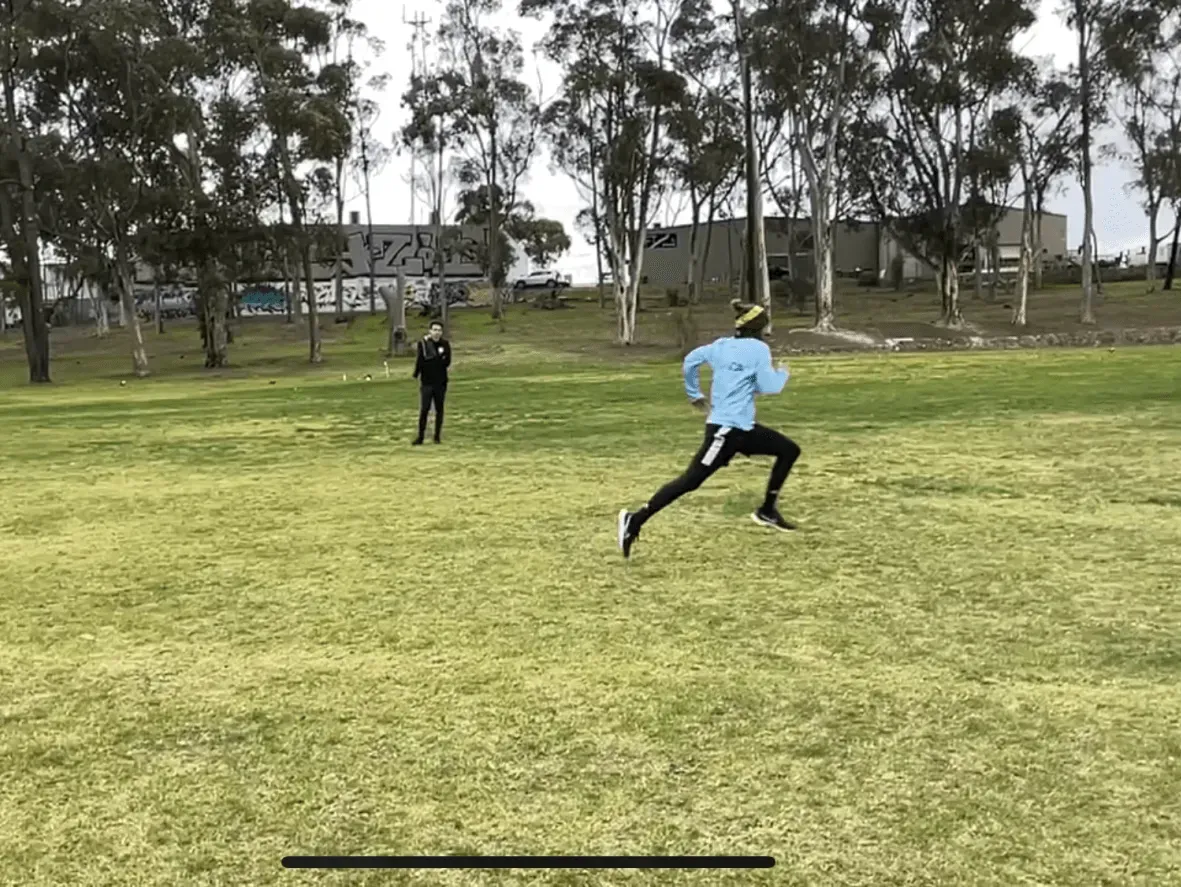
Does your child look like they are running on a treadmill?
Does Your Child Run Like They Are On a Treadmill?
Parents often tell us the same thing.
“My child looks like they are trying really hard when they run, but they do not actually go anywhere.”
If that sounds familiar, your child may be running like they are on a treadmill. Lots of movement, lots of effort, very little forward speed.
This is incredibly common in junior athletes and it is not a fitness problem. It is a movement mechanics problem.
The good news is that it is very fixable with the right strength and conditioning approach.
What does running on a treadmill look like?
Kids who run like they are on a treadmill usually show a few key signs:
• Short, choppy strides
• Legs cycling quickly but not powerfully
• Upright posture with little forward lean
• Minimal hip extension
• Arms moving fast but not helping drive speed
They look busy, not fast.
This often leads to frustration for the child and confusion for parents, especially when the child trains hard and still struggles to keep up in games.
Why this happens in kids
Most kids are not taught how to run well. They just run.
As sport becomes more competitive, poor mechanics get exposed quickly. The most common contributors we see are:
1. Weak hips and glutes
Power in running comes from the hips. If the glutes are weak, kids cannot push the ground away effectively.
2. Poor coordination and timing
Running is a skill. Without guidance, kids often develop inefficient patterns that waste energy. This can be especially heightened during growth spurts.
3. Lack of strength through key positions
If a child cannot hold strong postures through their trunk, hips, and ankles, their force leaks instead of propelling them forward.
4. Too much sport, not enough athletic development
Playing sport alone does not guarantee good movement. Strength and conditioning fills the gaps sport misses.
Why running technique matters beyond speed
Poor running mechanics do more than slow kids down.
They can also increase the risk of issues such as:
• Recurrent shin pain
• Knee pain during growth spurts
• Hip and lower back discomfort
• Early fatigue late in games
• Panicked and rushed decision making
When kids learn to run efficiently, they not only move faster but also move safer.
How strength and conditioning fixes this
At Pivot Sports Performance, we do not just tell kids to run faster.
We build the foundations that allow speed to happen naturally.
This includes:
Targeted strength training
Age appropriate strength work focusing on hips, hamstrings, calves, and trunk control.
Running mechanics coaching
Teaching kids how to apply force into the ground properly, not just move their legs quickly.
Coordination and plyometric work
Helping kids learn timing, rhythm, and stiffness through drills that transfer directly to running.
Progressive exposure
We layer skills and strength over time so kids move better as they grow, not worse.
The goal is simple. Less wasted movement. More forward momentum.
How to tell if your child would benefit
Your child may benefit from structured strength and conditioning if:
• They look fast but get beaten easily in games
• They have great skills early in games or at training, but don't execute late in games
• They fatigue quickly despite good fitness
• They have repeated lower limb niggles
• They have had a growth spurt and look awkward running
• You want to build speed safely before teenage years
Early intervention makes a massive difference.
Final thoughts
If your child looks like they are running on a treadmill, it is not because they are lazy or unfit.
It is because no one has shown them how to use their body properly yet.
That is exactly what a good kids strength and conditioning program is designed to do.
If you want help improving your child’s running mechanics, speed, and confidence, our team can guide you through it.
