Why Missing Rep Teams Makes Better Athletes | Long-Term Development
Why Missing Early Representative Teams Might Be the Best Thing for Your Child’s Sporting Future
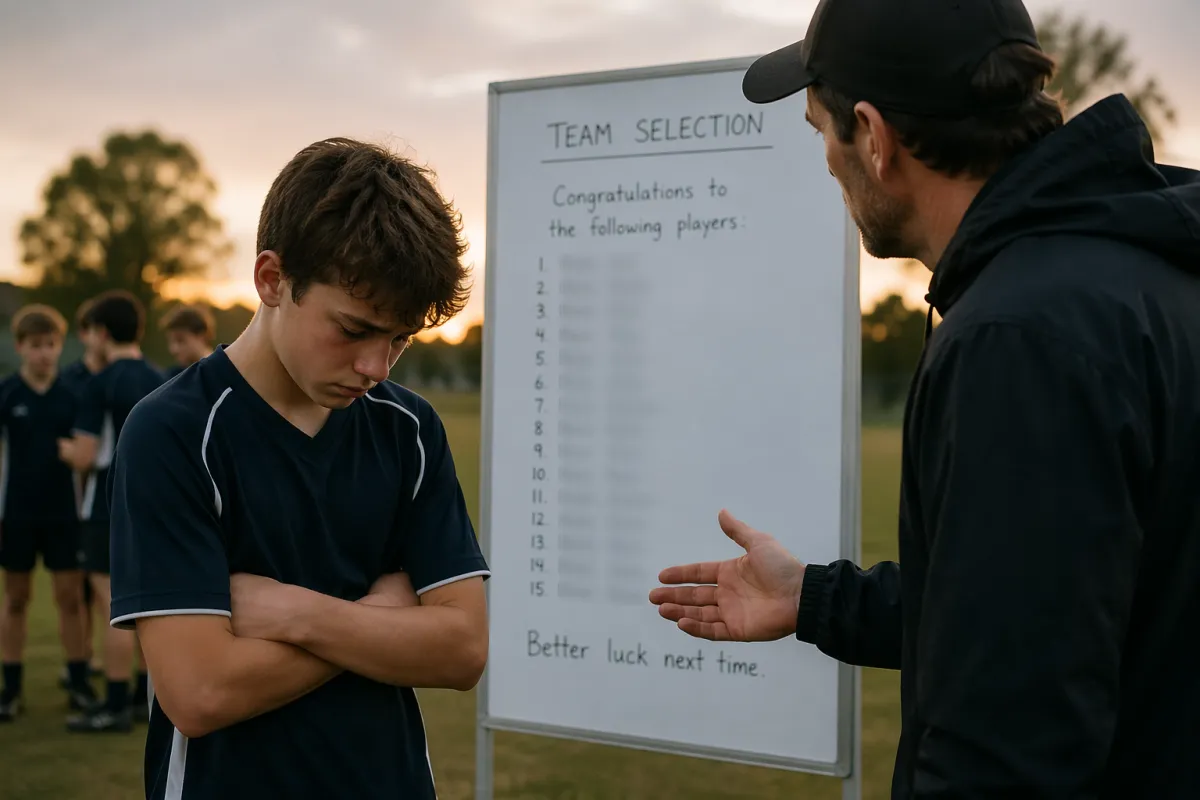
Every year, thousands of young athletes try out for representative teams.
And every year, a large percentage of them miss out.
For many parents and kids, this feels like failure. It feels like a missed opportunity. It can shake confidence and, in some cases, lead to kids walking away from sport altogether.
But what if we’ve got it wrong?
What if missing representative teams in the early teenage years is actually one of the best things that can happen for long-term athletic success?
Early Selection Doesn’t Equal Long-Term Success
At 12–15 years old, selection is often based on who is bigger, faster, and more physically developed right now.
Not who will be the best athlete in 3–5 years.
This is known as the relative age effect. Kids who mature earlier tend to dominate early pathways, while late developers are often overlooked.
But here’s the reality:
Many early-selected athletes plateau.
And many athletes who miss early selection go on to outperform their peers later.
Why?
Because they are forced to build something deeper than early physical advantages.
Rejection Builds the Skill Most Athletes Avoid
Missing a team teaches something that cannot be coached in a gym session:
Resilience.
When an athlete misses selection, they are faced with a choice:
Drop their head and disengage
Or take ownership and improve
Athletes who choose the second path develop:
Emotional control
Work ethic
Internal motivation
The ability to handle pressure and setbacks
These are the exact traits required to succeed at higher levels of sport.
At elite levels, everyone is talented.
What separates athletes is how they respond when things don’t go their way.
The Role of Strength and Conditioning After Setbacks
This is where strength and conditioning becomes a game changer.
Athletes who miss early teams often have a window to focus on development instead of just competition.
Instead of playing 3–4 games per week, they can:
Address weaknesses
This is the foundation of long-term athletic development.
A well-structured strength and conditioning program helps athletes:
Close physical gaps with early developers
Reduce injury risk during growth phases
Improve confidence through measurable progress
Build habits that carry into senior sport
The athletes who lean into this phase often make massive jumps between ages 15–18.
Less Burnout = More Longevity
Early selection often comes with:
High training loads
Travel commitments
Pressure to perform
Reduced time for general development
This can lead to burnout, both physically and mentally.
Athletes who miss early pathways tend to:
Stay in the game longer
Maintain enjoyment
Develop a broader skill set
Avoid overuse injuries
Long-term success in sport is not about who wins at 13.
It is about who is still improving at 18, 21, and beyond.
They Learn to Love the Process, Not Just the Outcome
Athletes who are always selected can become outcome-driven.
Selection becomes expected.
Success becomes tied to external validation.
But athletes who experience early setbacks often shift their focus.
They learn to value:
Effort
Progress
Skill development
Daily habits
This creates a much more sustainable performance mindset.
They train because they want to improve, not just because they want to be picked.
Late Developers Often Win the Long Game
By the time physical development evens out in late adolescence:
Strength gaps can be closed
Speed can be developed
Skills can be refined
But mindset is harder to catch up on.
Athletes who have built resilience, discipline, and consistency over years of being overlooked often surge ahead.
This is why many elite athletes were not standouts in their early teens.
They simply stayed in the game, developed properly, and kept improving.
What Parents and Coaches Need to Understand
If your child misses a representative team, it is not a dead end.
It is a fork in the road.
Handled correctly, it can become a massive advantage.
Here’s what matters most:
1. Reframe the Situation
This is not failure.
This is feedback.
Use it to identify gaps and create a plan.
2. Invest in Development, Not Just Games
Games expose weaknesses.
Training fixes them.
Strength and conditioning should be a priority during this phase.
3. Focus on Long-Term Progress
Zoom out.
Ask: where do we want this athlete to be in 3–5 years?
Not next weekend.
4. Protect Enjoyment of Sport
Burnout kills more careers than lack of talent.
Keep training challenging, but enjoyable.
The Takeaway
Missing early representative teams is not the setback it appears to be.
In many cases, it is the exact stimulus an athlete needs to:
Build resilience
Develop physically
Improve their work ethic
Stay in sport longer
When combined with a structured strength and conditioning program and a long-term development mindset, this period can set athletes up for greater success than early selection ever could.
Because in sport, the goal is not to be the best at 13.
It is to be the best when it actually counts.
