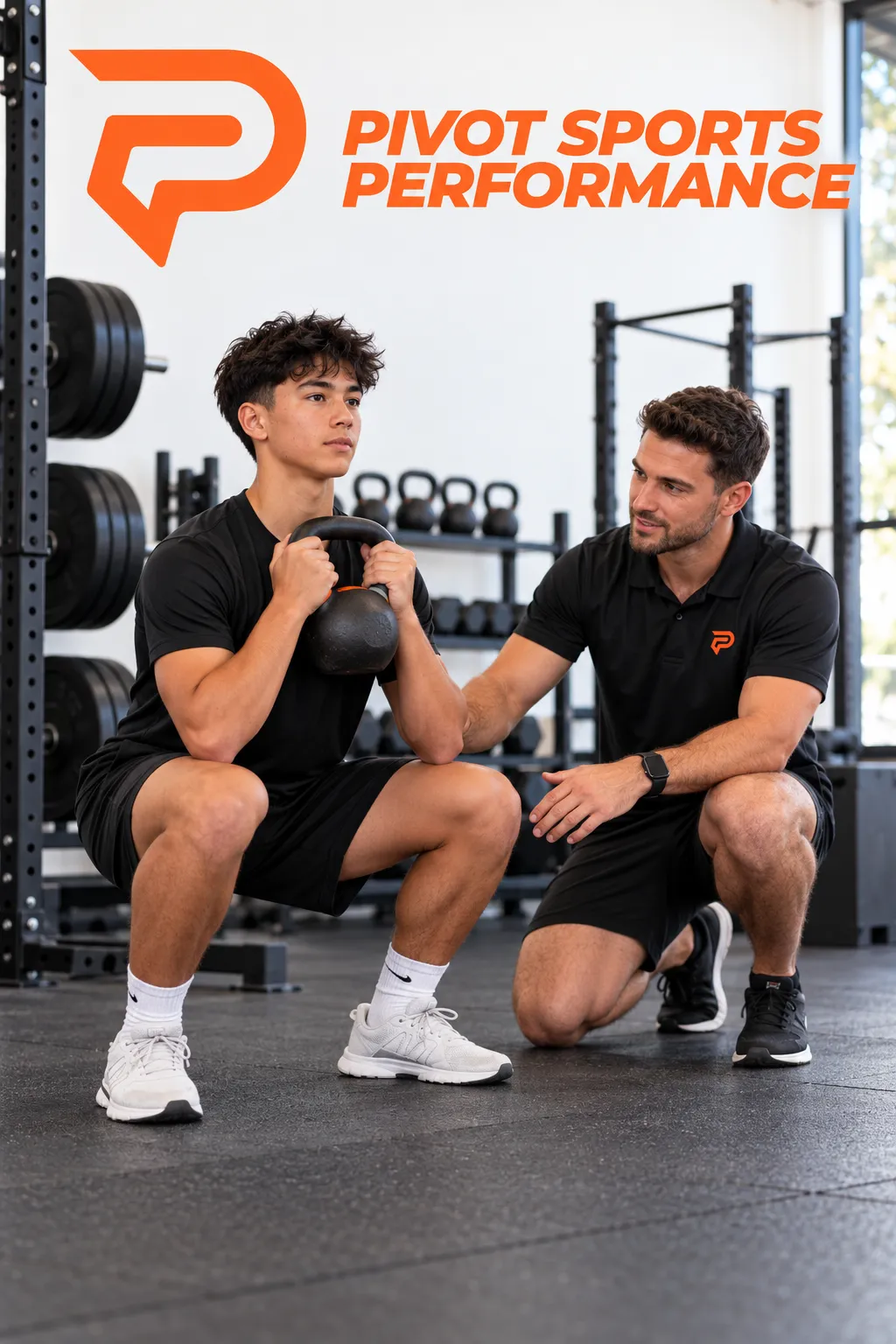
Strength Training for Teenagers in Melbourne: Is It Safe?
Is Strength Training Safe for Teenagers? A Melbourne Parent’s Guide
Your teenager has asked to join a gym. Maybe they want to get stronger for cricket, basketball, netball or football. Maybe a coach has suggested strength and conditioning. Or perhaps they have seen training clips online and want to copy what older athletes are doing.
For many parents, the first thought is not performance. It is safety.
Will lifting weights affect growth? Is the gym appropriate before adulthood? How heavy is too heavy? And how can you tell the difference between a useful program and a risky one?
The short answer is reassuring: properly designed and supervised strength training can be safe and useful for teenagers. The quality of the program matters far more than simply whether it includes weights. A good program matches the young person’s experience, maturity, sport, schedule and current capacity. It teaches skills before chasing numbers.
Here is what Melbourne families should know before a young athlete starts.
Strength training is more than lifting heavy weights
Strength training means working against resistance so the body learns to produce and control force. That resistance might come from:
bodyweight movements such as squats, push-ups and split squats
resistance bands
medicine balls
dumbbells or kettlebells
barbells and machines when appropriate
jumping, landing, sprinting and change-of-direction drills
For a teenager, the goal is not to train like a bodybuilder or test a maximum lift every week. The early priorities are learning sound movement, building coordination, developing whole-body strength and gaining confidence in a structured environment.
Australia’s physical activity recommendations for young people include muscle and bone strengthening activities on at least three days each week as part of overall activity. Those activities can include running, climbing, bodyweight exercises, yoga and lifting weights. Formal gym sessions are only one part of the picture.
Does strength training stunt growth?
This is one of the most persistent concerns around teenagers and the gym. Current guidance does not support the idea that appropriately prescribed resistance training stunts a young person’s growth.
The more relevant risks come from poor technique, unsuitable equipment, excessive loading, unsupervised sessions and programs that ignore fatigue or injury. Those are coaching and programming problems, not an inevitable result of strength training.
Sports Medicine Australia’s child safety guidelines state that a properly designed and supervised program can be safe and can improve strength, motor skills and performance. The guidelines emphasise correct technique, gradual progression and close monitoring by a qualified coach.
That distinction is important. A teenager learning a squat pattern with a light load under supervision is very different from a teenager attempting a maximal lift they found on social media.
What are the potential benefits for a young athlete?
When the program is appropriate, strength and conditioning can support several qualities that matter in sport and everyday life.
Better movement skills
Teenagers are still learning how to coordinate their bodies as they grow. Strength training gives them repeated practice in producing force, absorbing force, balancing and controlling positions. These skills can carry over to sprinting, landing, changing direction and contact situations.
Greater strength and power
Progressive training can improve the ability to accelerate, jump, throw and hold position. The exact transfer depends on the sport and the quality of the program. Gym strength does not automatically make someone a better player, but it can build physical capacity that supports skill practice.
More confidence with physical tasks
Learning a new movement, adding a small amount of load and seeing steady progress can help a young athlete feel more capable. Coaching should keep the focus on skill, consistency and effort rather than appearance or comparison with teammates.
Preparation for sporting load
A teenager’s week can include school sport, club training, matches, physical education and extra skills sessions. Strength training should be planned around that total workload. Done well, it can help build capacity. Added carelessly, it can become one more source of fatigue.
The international consensus on youth resistance training supports age-appropriate, technique-driven programs and emphasises that training should be matched to a young person’s developmental needs.
What age can a teenager start strength training?
There is no single birthday on which strength training suddenly becomes safe. Readiness matters more than age alone.
A young person may be ready for structured training when they can:
listen to and follow coaching instructions
practise movements without rushing
communicate pain, discomfort or unusual fatigue
respect equipment and other people in the gym
attend consistently enough to learn safely
The starting point should reflect training age, not just chronological age. A 16-year-old with no gym experience is a beginner. A younger athlete with years of supervised movement training may have a larger skill base. Growth and maturation also occur at different rates, so programs should not assume that athletes of the same age need the same exercises or loads.
What should a safe teen strength program look like?
Parents do not need to judge every exercise. They can look for the behaviours and systems that make good coaching visible.
1. An assessment before a generic program
The coach should learn about the athlete’s sport, training week, goals, injury history and experience. Movement and physical testing may help establish a starting point when it is used to guide decisions, not to label a teenager as good or bad.
Pivot’s Elite Athlete Blueprint performance testing assesses relevant physical qualities and helps inform an individual plan.
2. Technique before load
The athlete should first learn the movement with a manageable resistance and receive clear feedback. Load can increase gradually when technique remains consistent. There is no prize for making an exercise look difficult.
3. Whole-body development
A balanced program usually includes variations of squatting, hinging, pushing, pulling, carrying, jumping or landing, and trunk control. Exercise selection should suit the athlete rather than force every teenager into the same template.
4. Progression that can be explained
Good programs change for a reason. Progress might mean better technique, an extra repetition, a small increase in load, more control, a harder variation or improved speed. It should not mean adding weight automatically every session.
5. Active supervision
A coach should be able to see the athlete, give feedback and adjust the session. Simply having an adult somewhere in the building is not the same as coaching.
6. Training that fits the whole week
The gym plan should account for matches, skills sessions, school demands and recovery. During a busy competition period, the dose may need to reduce. In an off-season block, there may be room to build more progressively.
Pivot’s Athlete Performance Program combines individualised strength and conditioning with coaching, testing and planning across the sporting year.
Red flags parents should watch for
A strength program deserves a closer look if it relies on:
regular maximum-lift testing for beginners
punishment workouts or training to exhaustion
pain being dismissed as weakness
identical programs for every athlete regardless of sport or history
rapid load increases without a clear reason
unsupervised use of equipment the athlete has not learned
pressure to train through illness, significant soreness or injury
an excessive focus on body weight or appearance
Normal training effort and mild short-term muscle soreness can occur, particularly when someone starts a new program. Sharp pain, worsening pain, joint swelling, altered movement, night pain or symptoms that affect daily activity should not be treated as a normal price of training. The athlete should stop the aggravating activity and seek appropriate assessment.
Families near Bundoora can explore sports physiotherapy in Bundoora, while those in Melbourne’s east can access sports physiotherapy in Ringwood.
How often should a teenager lift weights?
There is no universal weekly number. For many beginners, two well-spaced supervised sessions can provide enough exposure to learn and progress while leaving room for sport and recovery. The total activity week matters more than the gym count in isolation.
A teenager already completing several club and school sessions may need a lower gym dose than someone in an off-season phase. Sleep, nutrition, school stress, growth and how the athlete feels should all inform the plan.
More is not automatically better. A useful program is one the athlete can recover from and repeat consistently.
Questions to ask before choosing a program
Parents can ask:
Who designs and supervises the program?
What qualifications and youth coaching experience do they have?
How will the starting level be assessed?
How is technique taught and monitored?
How will the program fit around sport and school?
What happens if the athlete reports pain or excessive fatigue?
How is progress reviewed?
How does the coach communicate with parents, sporting coaches or clinicians when needed?
The answers should be clear and practical. Good coaching is not secretive.
A strong start is a skilled start
Teen strength training does not need to be extreme to be effective. The safest and most useful programs are patient: they teach first, progress gradually, adapt to the individual and respect recovery.
For Melbourne parents, the key question is not simply, “Is my teenager old enough to lift weights?” A better question is, “Is this program appropriate, supervised and connected to the rest of their sport?”
Pivot Sports Performance provides coached strength and conditioning and performance testing for athletes at Bundoora and Ringwood. To discuss a suitable starting point for your young athlete, contact Pivot Sports Performance.
