
Everything An Athlete Needs
In One Place
Our Strength and Conditioning Gym & Sports Rehab Facilities In Bundoora & Ringwood Help You Get Back To Sport & Maximise Your Performance
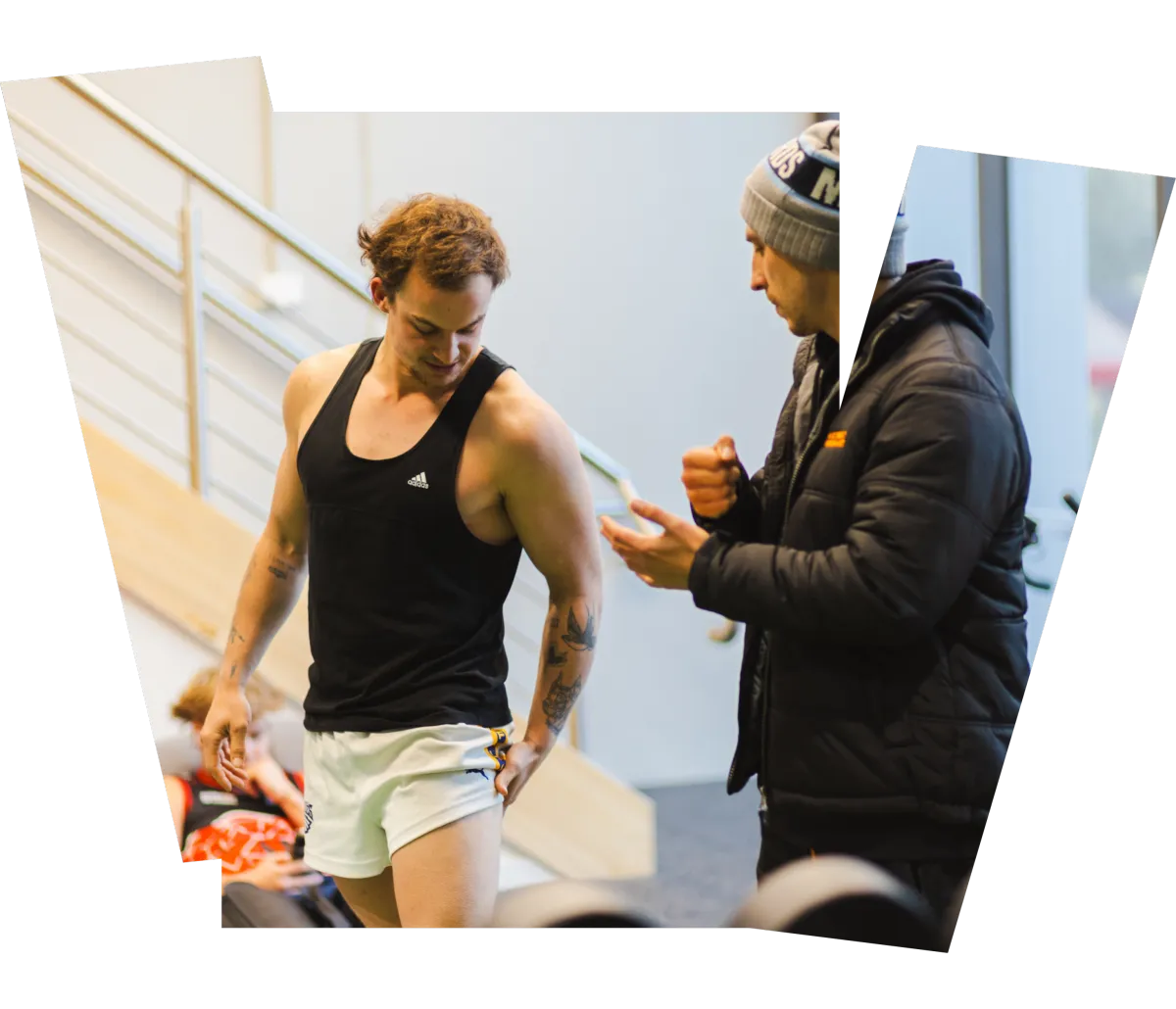
Excellent coaching and great programs set made for improving performance in your chosen sport, good facility and awesome vibes. - Angus
You Play Sport,
We Do The Rest.
Our Performance Consultants Are In The Corner Of Every Aspiring Athlete. We Provide A Complete System For Sports Performance, With Strength & Conditioning, Sports Physiotherapy, Concussion Management and Recovery Services At Our Facility.
Our Physios Have Been Trusted By












01

Athlete Performance Program
High Performance Training Throughout Your Entire Season.
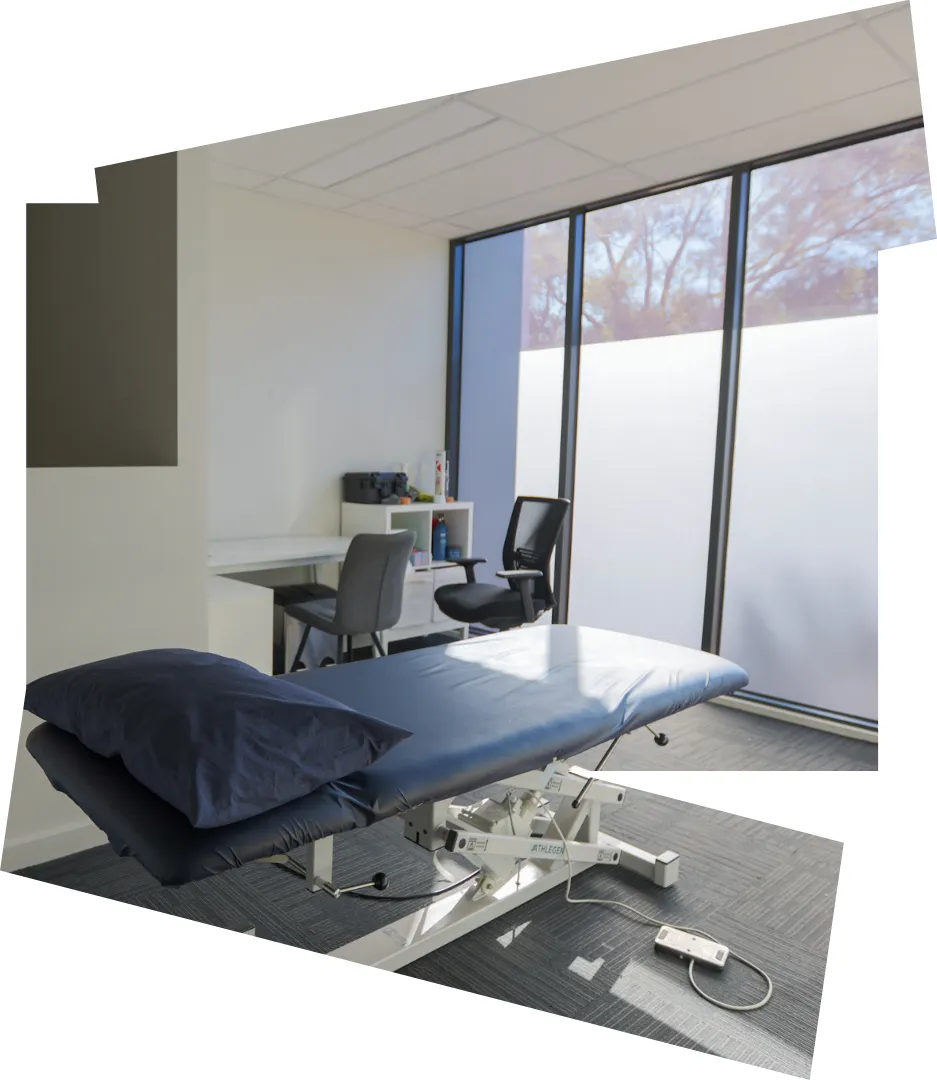
Sports Physio
Sport Specific Injury Management & Prevention

03
Concussion Clinic
Keeping Your Brain Safe With Up To Revolutionary Concussion Care
01
Athlete Performance Program
High Performance Training Throughout Your Entire Season.
02
Sports Physio
Sport Specific Injury Management & Prevention
03
Concussion Clinic
Keeping Your Brain Safe With Up To Revolutionary Concussion Care
Performance is for all of us.
We offer comprehensive coaching, team support, and science-backed tools to enhance every facet of life for all those we serve.
250+
5 Star Google Reviews
5,000+
Athletes Coached
15+
Professional Athletes
Pivot Sports Performance
Coaches prepare you and your teams for workplace success.
With our experts and your commitment, athletes at our Bundoora & Ringwood facilities will excel in sports performance.
Testimonial
Here's What People Are Saying


Blogs
Latest and Greatest
Heat Training for Marathon Running: My Sydney Marathon Heat Acclimation Strategy
Why I Added Heat Training to My Sydney Marathon Preparation
Preparing for a marathon is usually discussed in terms of kilometres, long runs, threshold sessions, nutrition and recovery.
But in the final six weeks of my preparation for the Sydney Marathon, I have added another element: heat training.
Each week, I have completed:
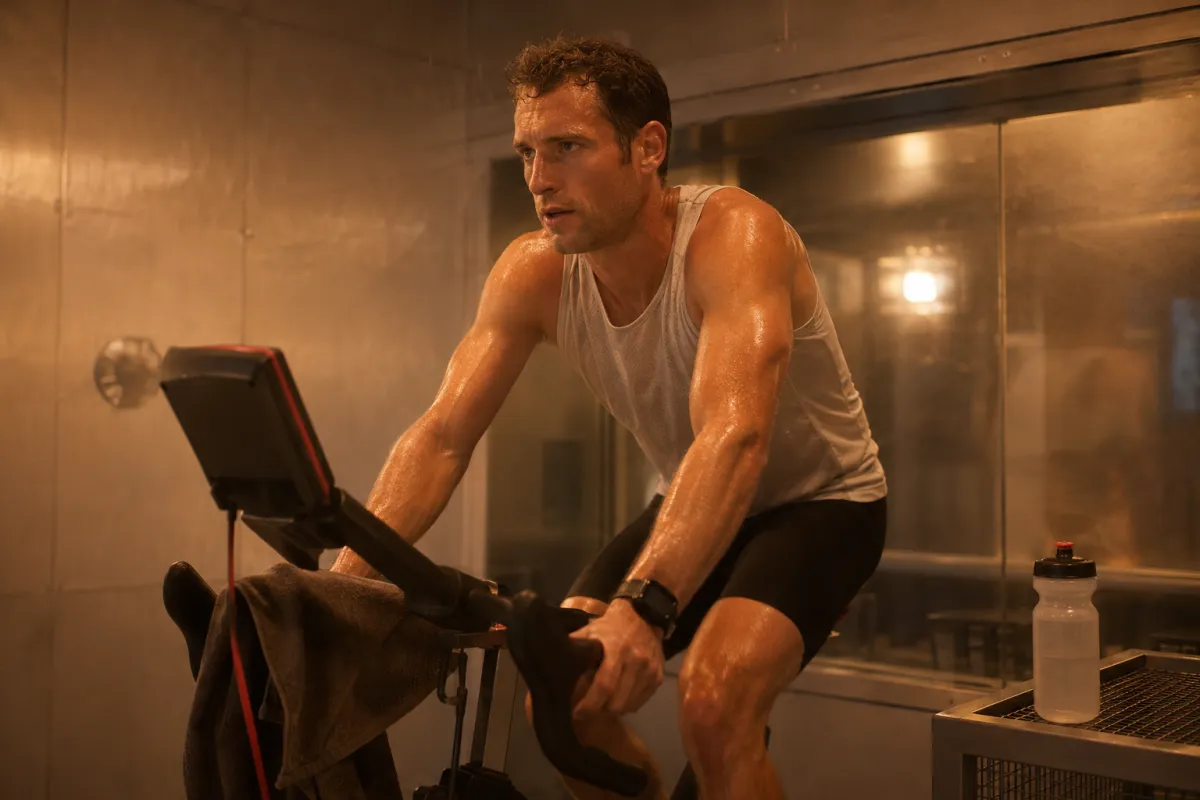
Two Zone 2 sessions on the Wattbike inside a heat chamber
One passive heat exposure session using a sauna
My normal running and strength program around these sessions
The goal has not been to make every session harder for the sake of it.
The goal has been to expose my body to repeated thermal stress and encourage adaptations that may help me regulate temperature, maintain cardiovascular stability and tolerate the physiological demands of marathon running in warmer conditions.
There are two main ways I have approached this: active heat acclimation and passive heat acclimation.
What is heat acclimation?
Heat acclimation is the process of repeatedly exposing the body to hot conditions so that it becomes better at managing thermal stress.
These aren't simply psychological adaptations.
A large meta-analysis of 96 heat-adaptation studies found that heat acclimation can improve exercise performance and capacity in the heat while producing beneficial changes in core temperature, cardiovascular stability, heat dissipation and perceptions of effort.
The researchers found that 7 to 14 days was the most commonly used acclimation period, although longer protocols generally produced greater adaptations.
For a marathon runner, these adaptations are potentially very important.
During prolonged running, the body generates enormous amounts of metabolic heat.
At the same time, the cardiovascular system needs to:
Deliver oxygenated blood to the working muscles.
Send blood towards the skin to dissipate heat.
Maintain blood pressure.
Replace fluid losses created through sweating.
The hotter the environment becomes, the more difficult this balancing act becomes.
Heat acclimation essentially gives the body repeated opportunities to practise dealing with this stress before race day.
My active approach: Zone 2 Wattbike sessions in a heat chamber
Twice per week, I have completed Zone 2 cycling sessions on a Wattbike inside a controlled hot environment.
There is an important reason I chose the bike rather than simply adding more running.
Running already represents a significant mechanical load.
Adding extra running purely for heat exposure would place additional stress through the:
Bones
Achilles tendons
Calves
Knees
Hamstrings
Hips
Cycling allows me to produce significant metabolic heat and cardiovascular stress while keeping the additional musculoskeletal loading relatively low.
For a marathon runner already accumulating significant running volume, that's an attractive combination.
Why active heat acclimation works
Exercise itself produces large amounts of heat.
When exercise is combined with a hot environment, the body experiences thermal stress from two directions:
Internal heat production from exercise
plus
External environmental heat
As core and skin temperatures increase, blood flow to the skin rises, sweating increases and the cardiovascular system has to work harder to maintain cardiac output.
Repeated exposure to this environment stimulates the adaptations associated with heat acclimation.
The 2016 Sports Medicine meta-analysis found moderate-to-large beneficial effects of heat adaptation on lowering core temperature and maintaining cardiovascular stability during subsequent exercise in the heat.
Why I kept the sessions at Zone 2
The point of these sessions isn't to turn every heat exposure into another threshold workout.
The heat itself is an additional physiological stressor.
As thermal strain develops, heart rate and perceived exertion can progressively rise even if the Wattbike power remains unchanged.
That makes low-to-moderate intensity aerobic work particularly useful.
I can generate substantial metabolic heat without creating the recovery cost that would come from another high-intensity session.
For me, the hierarchy remains clear:
My important running sessions need to remain high quality.
Heat training should support marathon training, not compromise it.
What happens physiologically?
One of the fascinating aspects of heat acclimation is that repeated exposure produces genuine changes throughout the cardiovascular and thermoregulatory systems.
1. Plasma volume can increase
One of the early responses to repeated heat exposure can be an expansion in plasma volume.
Plasma is the fluid component of blood.
Increasing plasma volume potentially gives the cardiovascular system a larger circulating fluid reservoir.
This becomes important during prolonged endurance exercise because blood needs to simultaneously support:
working skeletal muscle
and
skin blood flow for cooling.
An increased circulating volume can help maintain stroke volume as thermal stress develops.
This may contribute to one of the most recognisable consequences of heat acclimation:
a lower heart rate at the same submaximal workload.
2. Cardiovascular strain can decrease
The evidence for this adaptation is particularly strong.
Heat acclimation can reduce exercising heart rate and improve cardiovascular stability during exercise in hot conditions.
The major heat-adaptation meta-analysis found beneficial effects on cardiovascular function following repeated heat exposure.
In practical terms, the same running pace may eventually require less cardiovascular strain in hot conditions than it did before acclimation.
That doesn't mean running suddenly becomes easy.
It means the body becomes better equipped to manage the competing cardiovascular demands created by exercise and heat.
3. Sweating becomes more effective
Sweating is one of our most important mechanisms for dissipating heat.
Heat acclimation can alter:
Sweat onset
Sweat rate
Sweat distribution
Electrolyte conservation
The body can begin sweating earlier and become more effective at dissipating heat.
Longer heat-acclimation protocols may also improve sweat-related adaptations more effectively than very short interventions.
This is particularly relevant to marathon running because a relatively small difference in thermoregulation repeated across several hours can become meaningful.
4. Core temperature responses improve
Heat acclimation can reduce resting core temperature and reduce thermal strain during subsequent exercise in the heat.
The Tyler et al. meta-analysis reported moderate-to-large benefits for body-temperature regulation.
You aren't preventing your core temperature from increasing during a marathon.
Instead, you're potentially improving your ability to control that increase.
Another way of thinking about it is that you may be creating a larger thermal buffer before body temperature becomes particularly problematic.
5. The heat can start to feel easier
Heat acclimation isn't purely physiological.
Repeated heat exposure can also improve:
Thermal sensation
Ratings of perceived exertion
General heat tolerance
That matters enormously in endurance sport.
The brain constantly integrates information about:
Temperature
Muscle fatigue
Cardiovascular strain
Breathing
Effort
Motivation
A pace that feels unsustainably uncomfortable in the heat during your first session may feel significantly more manageable once you have adapted.
My passive approach: sauna exposure
The other part of my strategy has involved one sauna session per week.
This represents passive heat acclimation.
Rather than exercising in the hot environment, I expose myself to thermal stress while resting.
The appeal is obvious.
I can generate a meaningful heat stimulus without adding another training session or additional mechanical load.
What does the research say about sauna?
One of the most frequently referenced studies investigated competitive distance runners who completed approximately three weeks of post-exercise sauna exposure.
The runners used a sauna at approximately 90°C for around 30 minutes immediately after training.
The researchers reported an approximately 7% increase in plasma volume, alongside improvements in subsequent endurance performance.
You can read the original peer-reviewed study here:
Effect of post-exercise sauna bathing on the endurance performance of competitive male runners.
There is an important caveat.
The study involved only six male runners.
That makes it interesting evidence, but not strong enough to conclude that every marathon runner completing sauna sessions will experience the same improvements.
This is why I view sauna differently from active heat acclimation.
Active heat acclimation has a much larger evidence base.
Sauna is an additional way for me to accumulate thermal stress without dramatically increasing training load.
Why combine active and passive heat exposure?
This is where the strategy becomes particularly practical.
I'm not relying entirely on one method.
Active heat training provides:
Exercise-induced metabolic heat
Cardiovascular stress
Thermoregulatory stress
Additional low-intensity aerobic conditioning
Experience exercising while hot
Passive sauna provides:
Additional thermal exposure
Minimal mechanical loading
No additional running kilometres
A potential way of increasing total weekly heat exposure without adding another formal endurance session
There probably isn't one universally perfect heat protocol.
Individual response, training status, environmental conditions, recovery and total training load all matter.
The key is generating enough thermal stress to stimulate adaptation without creating so much fatigue that normal training suffers.
Why I started six weeks before Sydney Marathon
Many traditional heat-acclimation protocols are substantially shorter than mine.
The research frequently uses concentrated blocks of approximately 5 to 14 days.
The Tyler et al. meta-analysis found that protocols under 14 days can produce substantial physiological adaptation, but longer protocols tended to generate greater overall effects.
My approach has been different.
Rather than suddenly completing heat exposure almost every day immediately before the marathon, I have distributed it across approximately six weeks.
Each week consists of:
2 x active Zone 2 heat sessions
plus
1 x passive sauna exposure
That gives me repeated thermal exposure while still leaving room for the training that matters most:
Long runs
Marathon-specific sessions
Threshold work
Easy running
Strength training
Recovery
The goal isn't to win the heat-training Olympics.
The goal is to arrive at Sydney Marathon as prepared as possible.
When should heat training stop before a marathon?
This is one of the most interesting practical questions.
If heat adaptations disappeared immediately after stopping, we would theoretically want to continue heat exposure until race day.
Fortunately, they don't.
A systematic review and meta-analysis examining heat-acclimation decay found that adaptations decline progressively once heat training stops.
The researchers estimated that adaptations in end-exercise heart rate decreased by approximately 2.3% per day, while core-temperature adaptations decreased by approximately 2.6% per day during the period without heat exposure.
Importantly, that does not mean your entire heat adaptation disappears by 2.5% every day.
It refers to the progressive decay of specific physiological adaptations measured across the included studies.
The same review found that longer heat-acclimation programs tended to produce more persistent sweating adaptations.
That creates an important trade-off before a marathon.
You want to preserve your heat adaptations.
But you also want to:
Reduce fatigue
Restore glycogen
Arrive well hydrated
Sleep well
Minimise unnecessary stress
Feel fresh on race morning
For me, that makes approximately one week before the marathon a sensible point to remove the major heat-training stimulus.
My heat-training taper
Around seven days before race day, my significant heat exposures finish.
From there, the priority changes.
I'm no longer trying to create substantial new adaptations.
I'm trying to retain what I've built while removing fatigue.
If race forecasts indicated very hot conditions, a small maintenance heat exposure could potentially be considered during race week.
But I would want it to be short enough that it didn't meaningfully affect:
Recovery
Hydration
Sleep
Running quality
The marathon taper still takes priority.
The bigger lesson from this experiment
One of the things I increasingly appreciate about marathon preparation is that getting better doesn't always mean running more.
Performance is the interaction of multiple systems.
Running economy matters.
Threshold matters.
Aerobic capacity matters.
Musculoskeletal resilience matters.
Fuelling matters.
Hydration matters.
And when the race gets hot, thermoregulation matters too.
My six-week experiment has therefore combined traditional marathon training with:
Zone 2 cycling + heat
and
sauna + passive heat exposure.
Will this automatically make me faster at Sydney Marathon?
No.
The research doesn't justify making that claim.
But if race day becomes warm, improving my cardiovascular stability, thermoregulation and tolerance of the heat may allow me to preserve more of the running fitness I've spent months building.
And that is ultimately what I'm trying to achieve.
Sometimes improving performance isn't about building a bigger engine.
It's about making sure the engine you've already built can continue working when conditions become difficult.
Peer-reviewed research
Tyler CJ, Reeve T, Hodges GJ, Cheung SS. The Effects of Heat Adaptation on Physiology, Perception and Exercise Performance in the Heat: A Meta-Analysis. Sports Medicine. 2016.
Read the study
Daanen HAM, Racinais S, Périard JD. Heat Acclimation Decay and Re-Induction: A Systematic Review and Meta-Analysis. Sports Medicine. 2018.
Read the study
Scoon GSM, Hopkins WG, Mayhew S, Cotter JD. Effect of Post-Exercise Sauna Bathing on the Endurance Performance of Competitive Male Runners. Journal of Science and Medicine in Sport. 2007.
Read the study

Download Your
High Performance Hacks Here

Do you like the look of working with us?
Contact Us
We’d love to hear from you. We consult for individual athletes and sports teams. Tell us what you’re looking for, and we’ll guide you to the services that are right for you (even if that's not with us!).



Bundoora Location
23-25 Clements Avenue, Bundoora VIC 3083
Ringwood Location
Unit 1/7 Oban Rd, Ringwood VIC 3134
Bundoora Location
29 Clements Ave, Bundoora VIC 3083
Ringwood Location
Unit 1/7 Oban Road, Ringwood, 3134
Website & Marketing Powered By Gymini