
Everything An Athlete Needs
In One Place
Our Strength and Conditioning Gym & Sports Rehab Facilities In Bundoora & Ringwood Help You Get Back To Sport & Maximise Your Performance
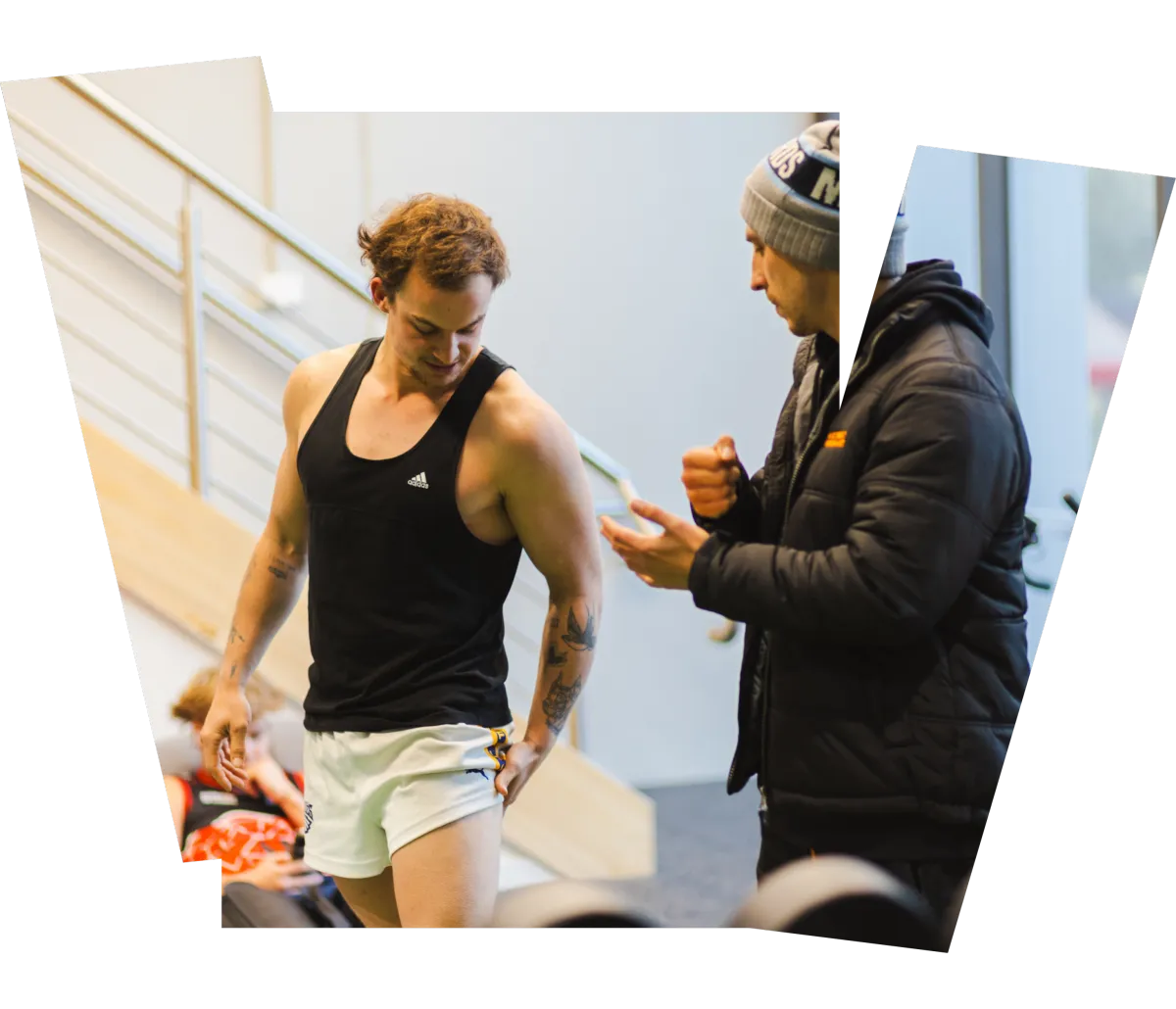
Excellent coaching and great programs set made for improving performance in your chosen sport, good facility and awesome vibes. - Angus
You Play Sport,
We Do The Rest.
Our Performance Consultants Are In The Corner Of Every Aspiring Athlete. We Provide A Complete System For Sports Performance, With Strength & Conditioning, Sports Physiotherapy, Concussion Management and Recovery Services At Our Facility.
Our Physios Have Been Trusted By












01

Athlete Performance Program
High Performance Training Throughout Your Entire Season.
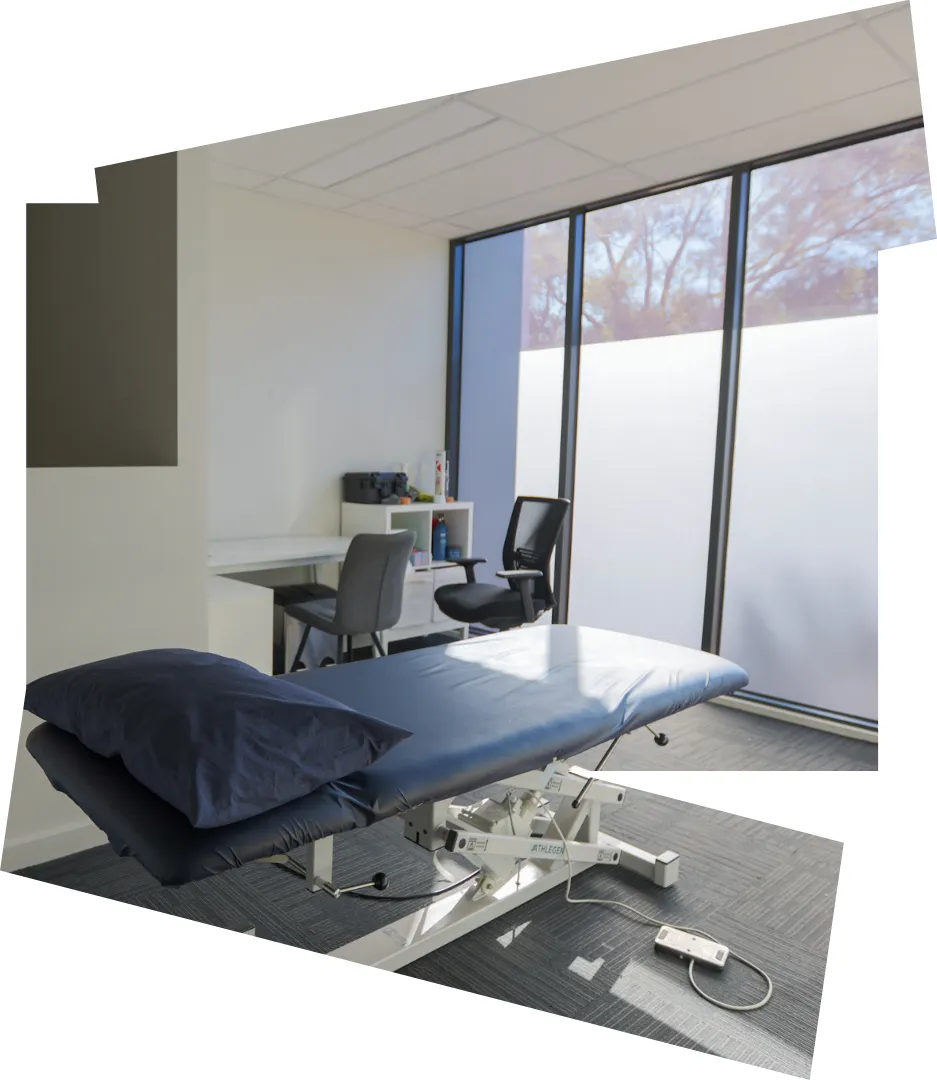
Sports Physio
Sport Specific Injury Management & Prevention

03
Concussion Clinic
Keeping Your Brain Safe With Up To Revolutionary Concussion Care
01
Athlete Performance Program
High Performance Training Throughout Your Entire Season.
02
Sports Physio
Sport Specific Injury Management & Prevention
03
Concussion Clinic
Keeping Your Brain Safe With Up To Revolutionary Concussion Care
Performance is for all of us.
We offer comprehensive coaching, team support, and science-backed tools to enhance every facet of life for all those we serve.
250+
5 Star Google Reviews
5,000+
Athletes Coached
15+
Professional Athletes
Pivot Sports Performance
Coaches prepare you and your teams for workplace success.
With our experts and your commitment, athletes at our Bundoora & Ringwood facilities will excel in sports performance.
Testimonial
Here's What People Are Saying


Blogs
Latest and Greatest
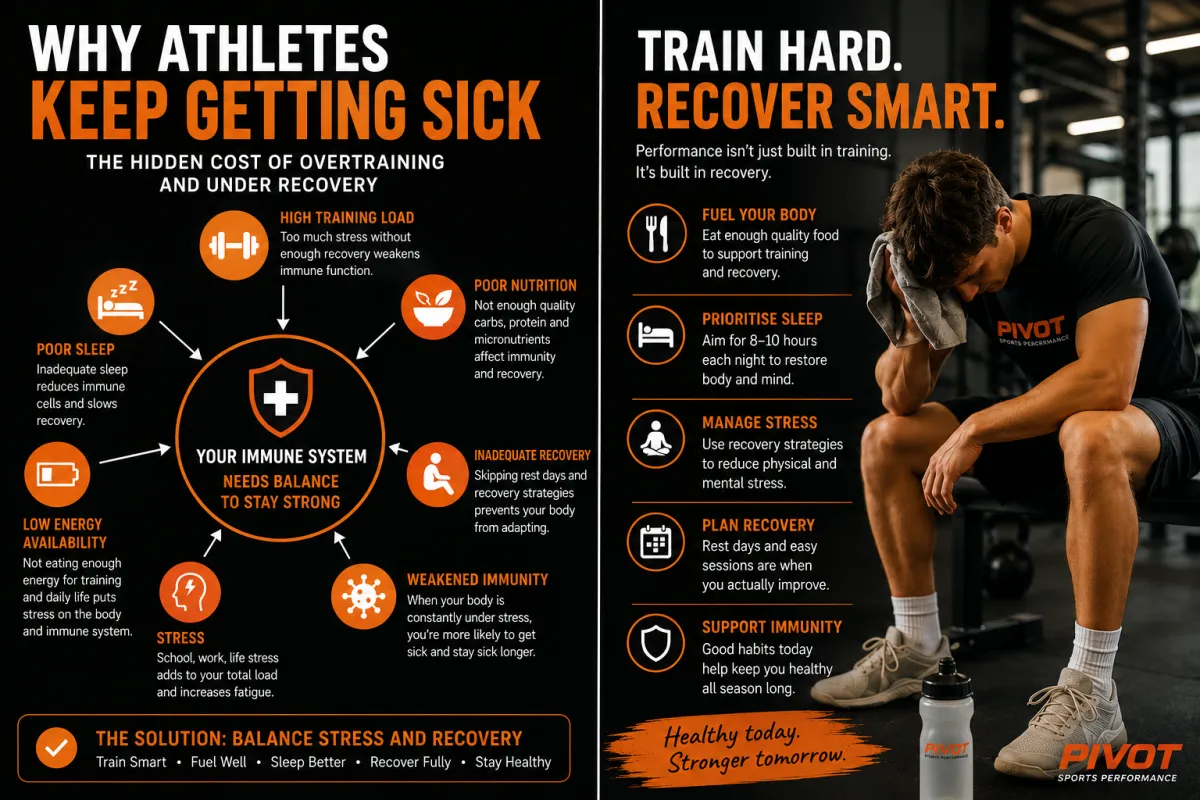
Why Athletes Keep Getting Sick | Overtraining, Recovery & Nutrition Explained
Why Do Some Athletes Keep Getting Sick?
You're training consistently.
You're eating reasonably well.
You're doing everything you think you should.
Yet every few weeks you're dealing with another cold, sore throat or virus that forces you to miss training.
If this sounds familiar, you're not alone.
At Pivot Sports Performance, we regularly see athletes who believe they're simply "unlucky" with illness. More often, the issue is a mismatch between how much stress the body is under and how well it is recovering.
Your immune system doesn't operate separately from your performance. It responds to the same factors that influence speed, strength and endurance, including training load, sleep, nutrition and overall recovery.
If you've never measured your body's physical capacity, our Performance Testing can help identify whether you're adapting well to your training and where improvements can be made: https://pivotsportsperformance.com.au/performance-testing
The athletes who stay healthy throughout a season are rarely the ones training the hardest. They're usually the ones recovering the smartest.
Training Is Stress
Exercise is a positive stress.
Every training session creates muscle damage, inflammation and fatigue. During recovery, your body repairs these tissues and adapts so that you're stronger and better prepared for the next session.
Problems begin when the next training session arrives before recovery is complete.
Instead of adapting positively, your body begins accumulating fatigue.
Initially this may present as:
Feeling flat at training
Slower sprint times
Heavy legs
Reduced motivation
Poor sleep
Persistent soreness
If this continues for weeks, your immune system often becomes the next casualty.
The Australian Institute of Sport (AIS) recognises that managing training load and recovery is essential for maintaining athlete health and performance: https://www.ais.gov.au/
If you're returning from injury, our Sports Physiotherapy team can help you safely progress your training load while reducing your risk of setbacks: https://pivotsportsperformance.com.au/sports-physiotherapy
Your Immune System Has a Recovery Budget
Think of recovery like a bank account.
Every day you make withdrawals through:
Training
School or university
Work
Family responsibilities
Mental stress
Daily movement
Growing and developing
Recovering from previous sessions
Recovery habits such as quality sleep, good nutrition and appropriate rest are your deposits.
If you're constantly withdrawing more than you're depositing, eventually something has to give.
For many athletes, that "something" is their immune system.
Research consistently shows that prolonged periods of high training load combined with inadequate recovery increase the likelihood of upper respiratory tract infections.
One important point is that your body doesn't distinguish between physical and psychological stress. A hard training block, school exams, long work hours and poor sleep all contribute to the same overall stress load.
The Nutrition Mistake Most Athletes Make
Many athletes believe eating "healthy" means they're fuelling properly.
Unfortunately, these aren't always the same thing.
One of the biggest contributors to frequent illness is Low Energy Availability (LEA).
LEA occurs when an athlete doesn't consume enough energy to support both exercise and the body's normal physiological functions.
When energy becomes limited, your body begins prioritising survival over performance.
That means systems responsible for:
Immune function
Hormone production
Bone health
Muscle repair
Recovery
Growth
receive fewer resources.
An athlete may continue training at a high level while their body is quietly struggling to keep up.
The International Olympic Committee (IOC) has published extensive research on Relative Energy Deficiency in Sport (REDs), highlighting the effects of inadequate fuelling on immune function, recovery, hormones, bone health and long-term performance: https://www.olympics.com/ioc/medical-and-scientific-commission
Carbohydrates Are More Important Than Many Athletes Realise
Carbohydrates have become one of the most misunderstood nutrients.
For athletes, they're essential.
Hard training rapidly depletes muscle glycogen, the body's primary fuel source during high-intensity exercise.
When glycogen stores remain chronically low:
Recovery slows
Stress hormones remain elevated
Protein breakdown increases
Training quality declines
Immune function becomes impaired
Many athletes who become sick during heavy training blocks are not necessarily training too hard. They're simply not replacing enough energy between sessions.
The AIS Sports Nutrition Framework recommends matching carbohydrate intake to your training demands rather than following restrictive diets: https://www.ais.gov.au/nutrition
Protein Supports More Than Muscle
Protein is often associated with building muscle.
However, it also provides the building blocks needed to produce antibodies, enzymes and immune cells.
Without adequate protein intake, recovery slows and immune resilience decreases.
Most athletes benefit from spreading protein intake evenly across the day rather than consuming it all at dinner.
If you're unsure how much you should be eating, Sports Dietitians Australia provides evidence-based nutrition advice specifically for athletes: https://sportsdietitians.com.au/
Sleep Is Your Greatest Recovery Tool
There isn't a supplement that can replace quality sleep.
While you sleep, your body:
Repairs damaged tissue
Restores muscle glycogen
Produces immune cells
Releases growth hormone
Regulates inflammation
Consolidates learning and motor skills
Athletes who consistently miss sleep often notice declining performance, slower recovery and increased illness.
This is especially true for adolescents balancing school, sport, social commitments and physical growth.
The Victorian Government's Better Health Channel also highlights the important role sleep plays in immune health and physical recovery: https://www.betterhealth.vic.gov.au/
Overtraining Is Rare. Under Recovery Is Common.
True Overtraining Syndrome is relatively uncommon.
Far more athletes are simply under recovered.
This occurs when the total stress placed on the body exceeds its ability to recover.
Training is only one contributor.
Other factors include:
Exams
Work commitments
Relationship stress
Travel
Poor sleep
Inadequate nutrition
Previous injuries
Illness
Two athletes can complete exactly the same training session yet recover very differently depending on everything happening outside the gym or sporting field.
This is why every athlete should have an individualised plan rather than following the same program as everyone else.
Our Athlete Performance Program is designed around the individual, ensuring training load, recovery and progression are tailored to each athlete's goals and circumstances: https://pivotsportsperformance.com.au/high-performance-training
Young Athletes Are Especially Vulnerable
Young athletes face unique demands.
They're trying to:
Grow
Recover
Improve strength
Become faster
Learn sporting skills
Perform well at school
All while often eating less than their bodies require.
Many teenagers underestimate how much energy organised sport actually demands.
Athletes involved in school sport, club sport, representative teams and gym training may require significantly more energy than they realise.
This is one reason why injuries and illness often occur together.
If you'd like to learn more about this topic, read our article Why Young Athletes Keep Getting Injured: Strength, Speed and Load Explained:
https://pivotsportsperformance.com.au/blog/why-young-athletes-keep-getting-injured-strength-speed-and-load-explained
Warning Signs You're Falling Behind on Recovery
Your body usually gives warning signs before illness develops.
Look out for:
Getting sick every few weeks
Fatigue that doesn't improve with rest
Declining performance
Persistent muscle soreness
Difficulty sleeping
Low motivation
Elevated resting heart rate
Mood changes
Recurrent injuries
Feeling flat during training
One of these symptoms in isolation isn't necessarily concerning.
Several occurring together over multiple weeks usually indicate your recovery strategies need attention.
Why Some Athletes Rarely Get Sick
Elite athletes don't stay healthy because they have stronger immune systems.
They stay healthy because they consistently recover well.
Their focus extends beyond simply completing training sessions.
They prioritise:
Eating enough to support training
Sleeping 8 to 10 hours each night
Managing stress
Progressively increasing training loads
Monitoring fatigue before it becomes excessive
Adjusting training when recovery falls behind
Working closely with physiotherapists, strength coaches and sports dietitians
Staying healthy isn't about finding the latest supplement or immune booster.
It's about creating an environment where your immune system can consistently keep pace with the demands of training.
How We Help Athletes Stay Healthy
At Pivot Sports Performance, we don't just ask how hard an athlete is training.
We ask whether they're recovering well enough to continue adapting.
Our integrated team considers:
Weekly training load
Strength and conditioning
Sleep quality
Nutrition
Recovery habits
Injury history
Competition schedule
School and work commitments
Where appropriate, we use Performance Testing to identify physical limitations before they contribute to injury or illness.
Athletes returning from injury can then transition directly into our Athlete Performance Program, ensuring they continue progressing safely instead of losing valuable training time.

Download Your
High Performance Hacks Here

Do you like the look of working with us?
Contact Us
We’d love to hear from you. We consult for individual athletes and sports teams. Tell us what you’re looking for, and we’ll guide you to the services that are right for you (even if that's not with us!).



Bundoora Location
23-25 Clements Avenue, Bundoora VIC 3083
Ringwood Location
Unit 1/7 Oban Rd, Ringwood VIC 3134
Bundoora Location
29 Clements Ave, Bundoora VIC 3083
Ringwood Location
Unit 1/7 Oban Road, Ringwood, 3134
Website & Marketing Powered By Gymini