
Everything An Athlete Needs
In One Place
Our Strength and Conditioning Gym & Sports Rehab Facilities In Bundoora & Ringwood Help You Get Back To Sport & Maximise Your Performance
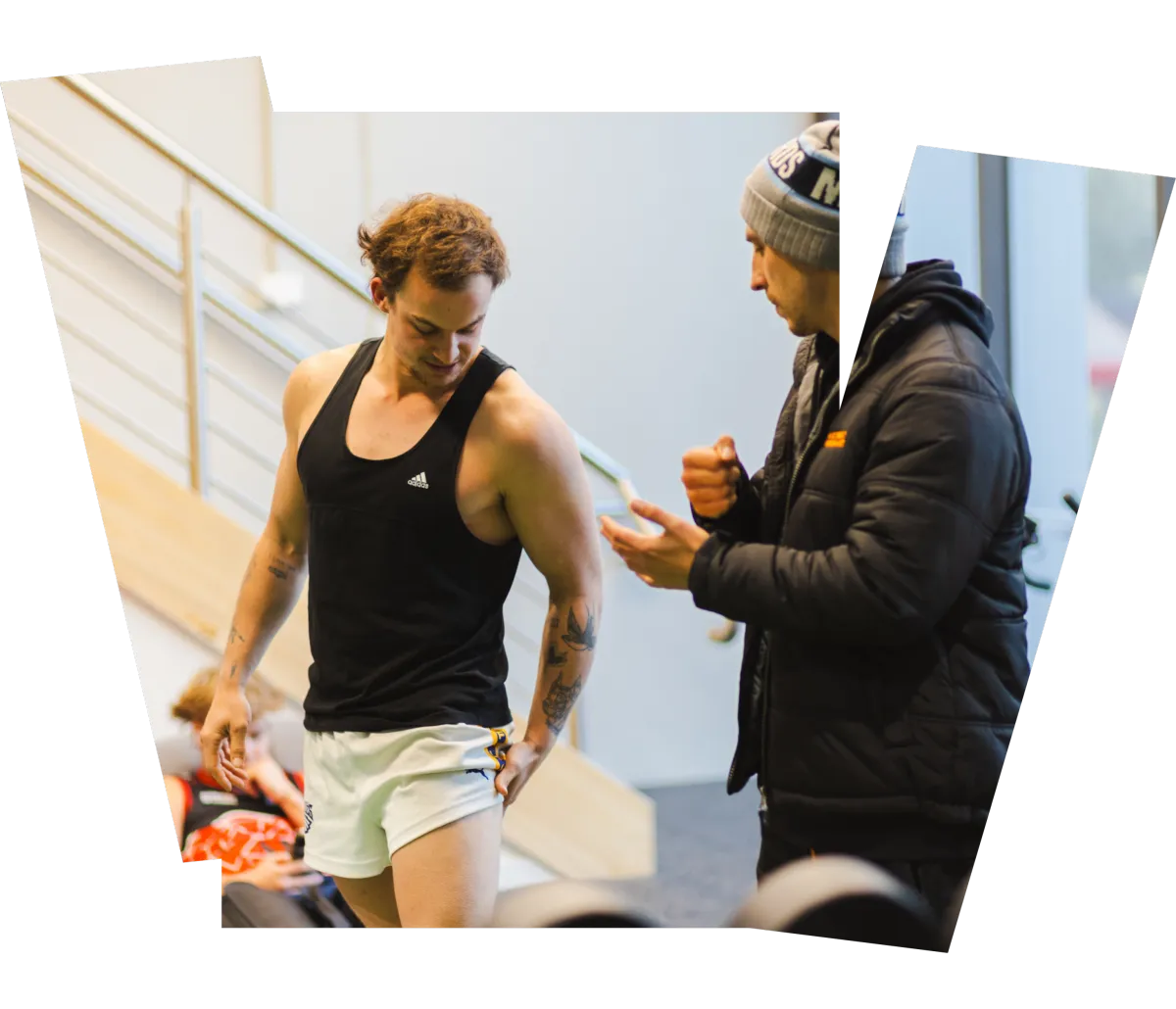
Excellent coaching and great programs set made for improving performance in your chosen sport, good facility and awesome vibes. - Angus
You Play Sport,
We Do The Rest.
Our Performance Consultants Are In The Corner Of Every Aspiring Athlete. We Provide A Complete System For Sports Performance, With Strength & Conditioning, Sports Physiotherapy, Concussion Management and Recovery Services At Our Facility.
Our Physios Have Been Trusted By












01

Athlete Performance Program
High Performance Training Throughout Your Entire Season.
Sports Physio
Sport Specific Injury Management & Prevention

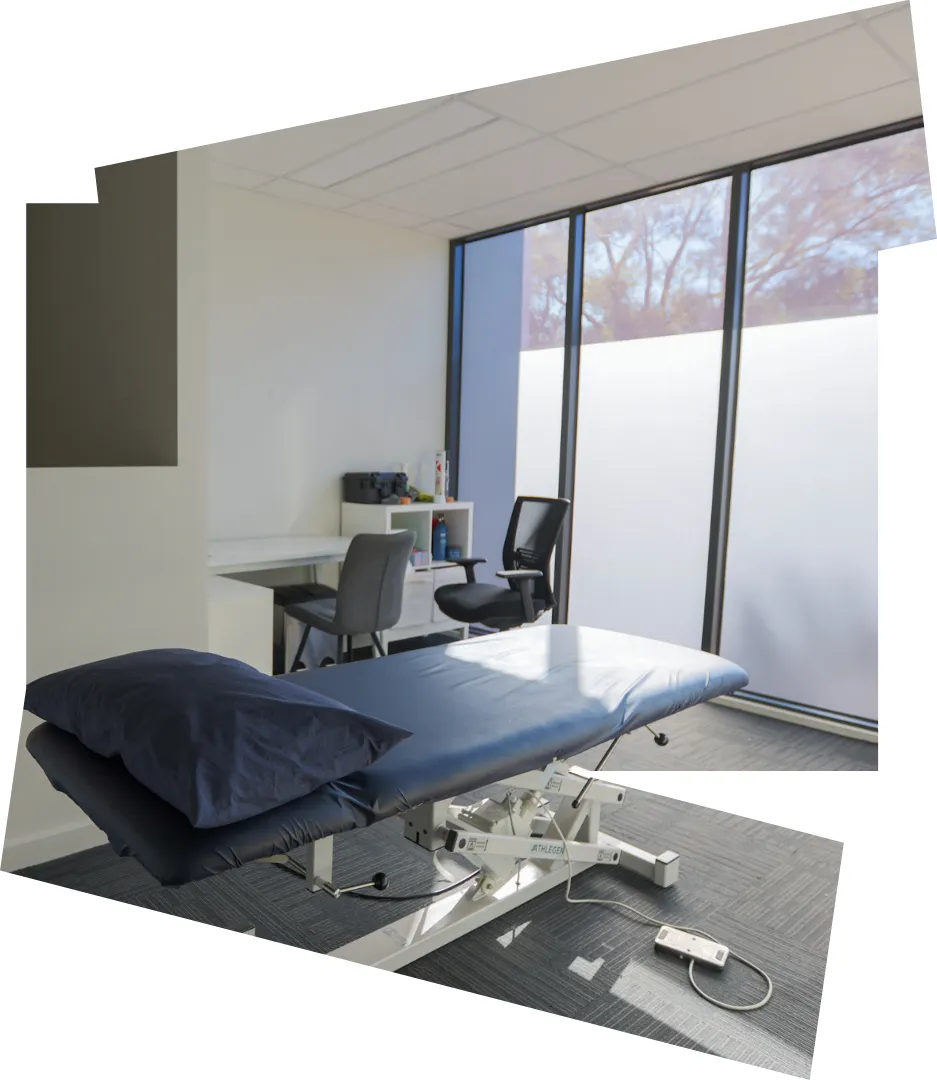
03
Concussion Clinic
Keeping Your Brain Safe With Up To Revolutionary Concussion Care
01
Athlete Performance Program
High Performance Training Throughout Your Entire Season.
02
Sports Physio
Sport Specific Injury Management & Prevention
03
Concussion Clinic
Keeping Your Brain Safe With Up To Revolutionary Concussion Care
Performance is for all of us.
We offer comprehensive coaching, team support, and science-backed tools to enhance every facet of life for all those we serve.
250+
5 Star Google Reviews
5,000+
Athletes Coached
15+
Professional Athletes
Pivot Sports Performance
Coaches prepare you and your teams for workplace success.
With our experts and your commitment, athletes at our Bundoora & Ringwood facilities will excel in sports performance.
Testimonial
Here's What People Are Saying


Blogs
Latest and Greatest

AFL Off-Season Training Melbourne: What to Train First
AFL Off-Season Strength and Conditioning in Melbourne: What to Train First
The final siren has gone. Your body is carrying a few sore spots, your weekly routine has disappeared, and next season suddenly feels both a long way away and just around the corner.
For many Melbourne footballers, that is when the off-season swings to one of two extremes: stop everything for months, or launch straight into punishing running and gym sessions. Neither approach makes the best use of this important window.
A good AFL off-season training plan starts with recovery, then builds the physical qualities that are difficult to improve when matches take over the week. The aim is not to win September training. It is to arrive at pre-season healthy, prepared and ready to handle more football-specific work.
Why the AFL off-season matters
Australian football asks for much more than steady running. A systematic review of Australian football sport science describes the game as intermittent and high intensity, with speed, aerobic fitness, reactive agility and well-developed lean mass among the important physical qualities. Players also accelerate, brake, jump, tackle and change direction under fatigue.
During the season, training has to fit around skills, matches, soreness, selection and recovery. The off-season creates room to address individual needs with fewer competing demands. One player may need more lower-body strength. Another may need better acceleration mechanics. A third may need to restore movement and confidence after playing through pain.
The AFL’s own training-year and periodisation resource frames the off-season around recovery, basic strength and endurance before the more intensive pre-season phase. That is a useful starting point: each phase has a job.
First, take a genuine transition period
A short reduction in structured training after the season can be valuable. It gives you time to recover physically, catch up socially and mentally step away from football. That does not have to mean complete inactivity.
For many healthy players, one to two weeks of enjoyable, low-pressure movement may be reasonable: walking, easy cycling, swimming, social sport or light gym work. The right duration depends on your age, season load, injury history, how you feel and when your formal pre-season begins.
Long periods of total training cessation can reduce aerobic fitness. A systematic review of detraining in athletes found declines in VO₂max after both shorter and longer training breaks. That does not mean you should keep training hard all year. It means a small amount of appropriate activity can help bridge the gap once the initial recovery period is complete.
Use pain as information, not a fitness test
The off-season is also the time to deal with the ankle that kept swelling, the hamstring that never felt trustworthy or the back pain that changed your kicking. Persistent pain, recurring symptoms, significant loss of movement or an injury that affects everyday activity deserves individual assessment. Do not use a hard conditioning block to test whether it has magically disappeared.
Players in Melbourne’s north can explore sports physiotherapy in Bundoora, while athletes in the east can view sports physiotherapy in Ringwood. An assessment can help determine what you can keep training and what needs to be modified.
What to train in the first six weeks
There is no universal AFL gym program, because positions, training age, injury history and current capacity all matter. However, a well-planned early off-season block commonly balances the following priorities.
1. Build a strength base
Strength underpins many football actions: producing force into the ground, holding position in a contest, absorbing contact and controlling the body when landing or changing direction. Early in the off-season, the focus is usually on consistent, high-quality work rather than testing maximum lifts every week.
Train major movement patterns: squat, hinge, push, pull, carry and trunk control.
Include single-leg work because football is full of running, kicking, stepping and landing from one leg.
Progress load only while technique, range and control remain sound.
Leave room to recover for field sessions; severe soreness is not proof of a better workout.
2. Keep speed in the program
Speed is a skill as well as a physical quality. Endless slow running will not teach you to accelerate efficiently. Short, high-quality sprint exposures with full recovery can sit early in a session, when you are fresh enough to move well.
This may include acceleration mechanics, short sprints, basic plyometrics and carefully progressed resisted sprint work. Recent systematic-review evidence on resisted sprint training suggests both resisted and unresisted sprint training can improve sprint and change-of-direction performance, but the best method and dose depend on the athlete. Pivot’s speed and agility training for team-sport athletes integrates field work with the wider performance plan.
3. Rebuild running capacity progressively
AFL players need an aerobic base and the ability to repeat high-intensity efforts. Early off-season conditioning should create capacity, not exhaustion. Start from what you actually completed during the season, not what an online program assumes you can do.
One or two lower-intensity aerobic sessions may sit alongside a controlled football-running session. Over time, volume, pace and change-of-direction demands can build. Avoid increasing gym load, sprint volume and hard running all at once. When several stressors rise together, it becomes difficult to know what your body is responding to.
4. Train braking and change of direction
Changing direction is not just about fast feet around cones. Players need enough strength and control to decelerate, organise their body and push into a new direction. Start with predictable drills and quality positions before adding reactive decisions, opponents and fatigue.
5. Make recovery part of the program
Adaptation happens between sessions. Sleep, food, hydration and sensible spacing between hard days matter more than chasing every recovery gadget. The Australian Institute of Sport sleep resource describes sleep as a critical strategy for physical and psychological recovery.
A simple check-in can be useful: note sleep quality, general soreness, motivation and any pain before training. These measures do not diagnose a problem, but they help you and your coach see whether the week is landing as intended.
A practical off-season week
The example below is a general framework for a healthy adult community footballer in an early off-season block. It is not a personalised prescription.
Day | Focus | Purpose |
Monday | Gym: full-body strength | Foundational strength and movement quality |
Tuesday | Field: acceleration + easy aerobic work | Speed skill, then base conditioning |
Wednesday | Rest or easy movement | Physical and mental recovery |
Thursday | Gym: full-body strength + low-volume jumps | Strength and power qualities |
Friday | Rest | Freshen up before field work |
Saturday | Field: running capacity + controlled change of direction | Progress football-relevant conditioning |
Sunday | Optional easy activity | Enjoyable movement without another hard session |
Your week may need fewer sessions, especially after a demanding season, during exam periods or when you are returning from injury. A coach can also align the plan with cricket, basketball, work shifts or other commitments.
What about junior footballers?
Appropriately designed resistance training can be suitable for young athletes, but coaching, technique, progression and maturity matter. The Australian Strength and Conditioning Association position stand provides age-banded guidance and stresses individual variation.
For juniors, the goal is not to copy an adult bodybuilder’s program or chase social-media numbers. Build movement skill, confidence and consistent habits under qualified supervision. Training should fit around growth, school, sleep and the total load from every sport the athlete plays.
Common off-season mistakes
Doing nothing for months, then trying to regain everything in pre-season.
Starting with repeated time trials before rebuilding strength and running tolerance.
Copying an elite player’s program without their training history, staff or recovery time.
Testing maximum lifts too often instead of accumulating quality work.
Adding hard running, heavy lifting and high-speed sprinting in the same week without progression.
Ignoring a persistent post-season injury because everyday walking feels comfortable.
Turn this off-season into a useful one
The best AFL off-season training plan is not the one that looks hardest on paper. It is the one you can progress, recover from and carry into pre-season. Recover first. Identify what will make the biggest difference. Build strength, speed and running capacity with intent. Then make the program more football-specific as the season approaches.
Pivot Sports Performance’s Athlete Performance Program in Bundoora and Ringwood combines individualised gym programming, performance testing, supervised strength and conditioning, and field-based speed and agility work. You can also check the current Bundoora and Ringwood session timetable or contact Pivot Sports Performance to discuss your goals.

Download Your
High Performance Hacks Here


Do you like the look of working with us?
Contact Us
We’d love to hear from you. We consult for individual athletes and sports teams. Tell us what you’re looking for, and we’ll guide you to the services that are right for you (even if that's not with us!).



Bundoora Location
23-25 Clements Avenue, Bundoora VIC 3083
Ringwood Location
Unit 1/7 Oban Rd, Ringwood VIC 3134
Bundoora Location
29 Clements Ave, Bundoora VIC 3083
Ringwood Location
Unit 1/7 Oban Road, Ringwood, 3134
Website & Marketing Powered By Gymini