
Everything An Athlete Needs
In One Place
Our Strength and Conditioning Gym & Sports Rehab Facilities In Bundoora & Ringwood Help You Get Back To Sport & Maximise Your Performance

Excellent coaching and great programs set made for improving performance in your chosen sport, good facility and awesome vibes. - Angus
You Play Sport,
We Do The Rest.
Our Performance Consultants Are In The Corner Of Every Aspiring Athlete. We Provide A Complete System For Sports Performance, With Strength & Conditioning, Sports Physiotherapy, Concussion Management and Recovery Services At Our Facility.
Our Physios Have Been Trusted By












01

Athlete Performance Program
High Performance Training Throughout Your Entire Season.
Sports Physio
Sport Specific Injury Management & Prevention


03
Concussion Clinic
Keeping Your Brain Safe With Up To Revolutionary Concussion Care
01
Athlete Performance Program
High Performance Training Throughout Your Entire Season.
02
Sports Physio
Sport Specific Injury Management & Prevention
03
Concussion Clinic
Keeping Your Brain Safe With Up To Revolutionary Concussion Care
Performance is for all of us.
We offer comprehensive coaching, team support, and science-backed tools to enhance every facet of life for all those we serve.
250+
5 Star Google Reviews
5,000+
Athletes Coached
15+
Professional Athletes
Pivot Sports Performance
Coaches prepare you and your teams for workplace success.
With our experts and your commitment, athletes at our Bundoora & Ringwood facilities will excel in sports performance.
Testimonial
Here's What People Are Saying


Blogs
Latest and Greatest
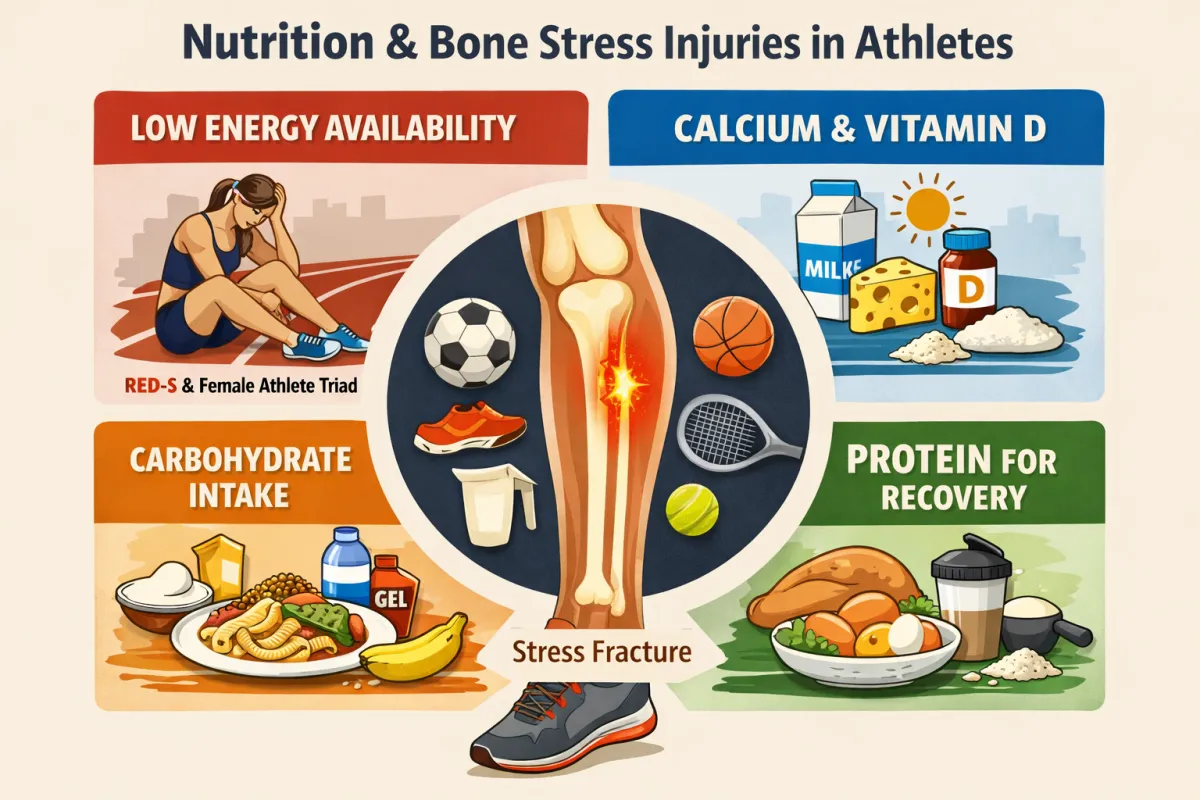
Nutrition and Bone Stress Injuries in Running Based Sports: Preventing Stress Fractures Through Proper Fueling
Nutrition and Bone Stress Injuries in Running-Based Sports: What the Research Really Suggests
Bone stress injuries (stress reactions, stress fractures) the whole frustrating spectrum are incredibly common in running-based sports. Athletics, soccer, AFL, basketball, netball, hockey, triathlon… if a sport involves repeated impact, sprinting, jumping, or sharp changes of direction, bones are under constant load.
Training load absolutely matters. But nutrition is one of the most controllable risk factors, and perhaps one of the most underestimated. Bones aren’t just hard structures that “wear out.” They’re living tissue. They respond, adapt, remodel. But only if they’re given enough energy and the right building blocks.
What follows isn’t hype or supplement marketing. It’s a practical summary of what research consistently points toward, especially for runners and field sport athletes managing high workloads.
The biggest nutrition risk factor: low energy availability
If there’s one theme that keeps showing up in the research, it’s this: under-fuelling is a major driver of bone stress injuries.
Low energy availability happens when your intake doesn’t match the cost of your training and daily life. The body doesn’t just shrug and carry on, it starts prioritising survival over performance. Hormones shift. Bone formation slows. Repair gets compromised.
This sits at the centre of RED-S (Relative Energy Deficiency in Sport), and in females, the Female Athlete Triad. Both are strongly associated with impaired bone health and higher stress fracture risk.
And here’s the part that surprises people: you do not need to have an eating disorder. You do not need to look underweight. You can be “eating clean” and still be chronically under-fuelled.
Common clues during a heavy training block:
Niggles that don’t quite settle
Repeated calf or shin pain
Poor sleep, irritability, low mood
Menstrual changes or missed periods (females)
Reduced libido or loss of morning erections (males)
Heavy legs and performance plateaus
Feeling cold frequently
Night-time hunger
Research in male endurance runners shows something similar: even with all the impact loading from running, which we often assume strengthens bone, low energy intake relative to training load can still impair bone outcomes.
Impact alone isn’t protective if the system is under-fuelled.
Keywords: low energy availability, RED-S, female athlete triad, stress fracture risk, bone stress injury runners.
Calcium and vitamin D: the fundamentals (food first)
Calcium is central to bone structure. Vitamin D helps regulate calcium absorption and bone metabolism. That part is well established.
One large randomized controlled trial in female military recruits showed that calcium plus vitamin D supplementation reduced stress fracture incidence during intense training. That’s meaningful. But it doesn’t mean everyone needs to immediately buy supplements.
The practical interpretation is simpler:
If you’re not hitting calcium targets through food, fix that.
If your vitamin D is low, which is common in winter or in indoor athletes. Correcting it matters.
Calcium-rich foods:
Milk, yoghurt, cheese
Fortified soy milk and plant yoghurts
Canned salmon or sardines with bones
Calcium-set tofu
Some leafy greens and almonds (smaller contributions)
Vitamin D sources:
Sensible sun exposure (varies by season and skin type)
Salmon, eggs, fortified products
Blood testing if you have repeated Bone Stress Injuries, winter fatigue, or limited sun exposure
Supplement only if indicated, ideally guided by a clinician.
Keywords: calcium for runners, vitamin D stress fractures, bone health nutrition.
Carbohydrates protect more than performance
Carbohydrates are often framed purely as a performance fuel. But during heavy training blocks, they also appear to influence bone turnover.
Studies in elite endurance athletes show that low carbohydrate availability, particularly alongside low overall energy availability, can reduce markers of bone formation and increase markers of bone breakdown, even over short time frames.
That’s not theoretical. It’s measurable.
Practical takeaways:
Don’t restrict carbs when mileage or intensity increases
Fuel before and after key sessions
Avoid body composition cuts mid-season
If changing body composition is a goal, do it off-season with guidance
Trying to train hard, recover, and protect bone health while chronically restricting carbohydrates is, frankly, a difficult equation to win.
Keywords: carbohydrates for runners, fueling for bone health, under-fuelling injury risk.
Protein and total intake: repair needs raw materials
Protein supports muscle repair, connective tissue, and overall recovery. During rehabilitation from a bone stress injury, this becomes even more relevant — you’re rebuilding tissue while often training less and potentially losing conditioning.
Common sports nutrition principles apply:
Spread protein across the day
Include quality protein at breakfast
Prioritise post-training intake
Maintain adequate total daily intake, especially during rehab
But again, protein cannot compensate for an overall calorie deficit. Total energy intake still underpins everything.
Reviews in endurance athletes continue to highlight that low energy availability remains one of the central drivers of bone stress injuries. Adequate dietary intake isn’t a bonus strategy: it’s foundational prevention.
Keywords: protein for injury recovery, nutrition for stress fracture healing.
Collagen and vitamin C: interesting, but not foundational
There’s growing interest in collagen or gelatin combined with vitamin C taken before loading sessions. Some studies show increases in markers associated with collagen synthesis.
Most of that research relates more directly to tendons and ligaments than bone itself. Still, in running-based sports, muscle, tendon, and bone capacity are interconnected. It’s not unreasonable to see it as a potential adjunct.
But it’s not a magic fix.
If the basics aren’t in place (enough total energy, adequate calcium and vitamin D, sensible carbohydrate availability, progressive loading) then collagen supplementation is probably just polishing the edges of a bigger issue.
Keywords: collagen supplementation athletes, gelatin vitamin C protocol.
A practical bone stress injury prevention checklist
Use this during pre-season or whenever training load climbs:
Avoid chronic calorie deficits during hard blocks
Place carbohydrates around demanding sessions
Ensure daily calcium intake through food
Check vitamin D if there’s a history of stress fractures or limited sun exposure
Distribute protein across the day
Monitor RED-S / Triad signs
Take menstrual changes, persistent fatigue, or libido changes seriously
These signals aren’t minor inconveniences. They’re often early warning signs.
When to get help
If you have a diagnosed stress fracture, repeated bone stress pain, a history of shin, foot, or hip stress injuries, or signs of under-fuelling, a combined approach usually works best.
Load management matters. So does strength training. But matching nutrition to the actual demands of the program is often the missing piece.
In practice, and this is something I see repeatedly, athletes will tweak footwear, adjust cadence, change surfaces… yet continue under-fuelling slightly. Not dramatically. Just enough. And over time, that small gap accumulates.
Bones adapt when they’re stressed appropriately and supported adequately.
Remove either piece, and the system eventually pushes back.

Download Your
High Performance Hacks Here

Do you like the look of working with us?
Contact Us
We’d love to hear from you. We consult for individual athletes and sports teams. Tell us what you’re looking for, and we’ll guide you to the services that are right for you (even if that's not with us!).



Bundoora Location
23-25 Clements Avenue, Bundoora VIC 3083
Ringwood Location
Unit 1/7 Oban Rd, Ringwood VIC 3134
Bundoora Location
29 Clements Ave, Bundoora VIC 3083
Ringwood Location
Unit 1/7 Oban Road, Ringwood, 3134
Website & Marketing Powered By Gymini