
Everything An Athlete Needs
In One Place
Our Strength and Conditioning Gym & Sports Rehab Facilities In Bundoora & Ringwood Help You Get Back To Sport & Maximise Your Performance

Excellent coaching and great programs set made for improving performance in your chosen sport, good facility and awesome vibes. - Angus
You Play Sport,
We Do The Rest.
Our Performance Consultants Are In The Corner Of Every Aspiring Athlete. We Provide A Complete System For Sports Performance, With Strength & Conditioning, Sports Physiotherapy, Concussion Management and Recovery Services At Our Facility.
Our Physios Have Been Trusted By












01

Athlete Performance Program
High Performance Training Throughout Your Entire Season.
Sports Physio
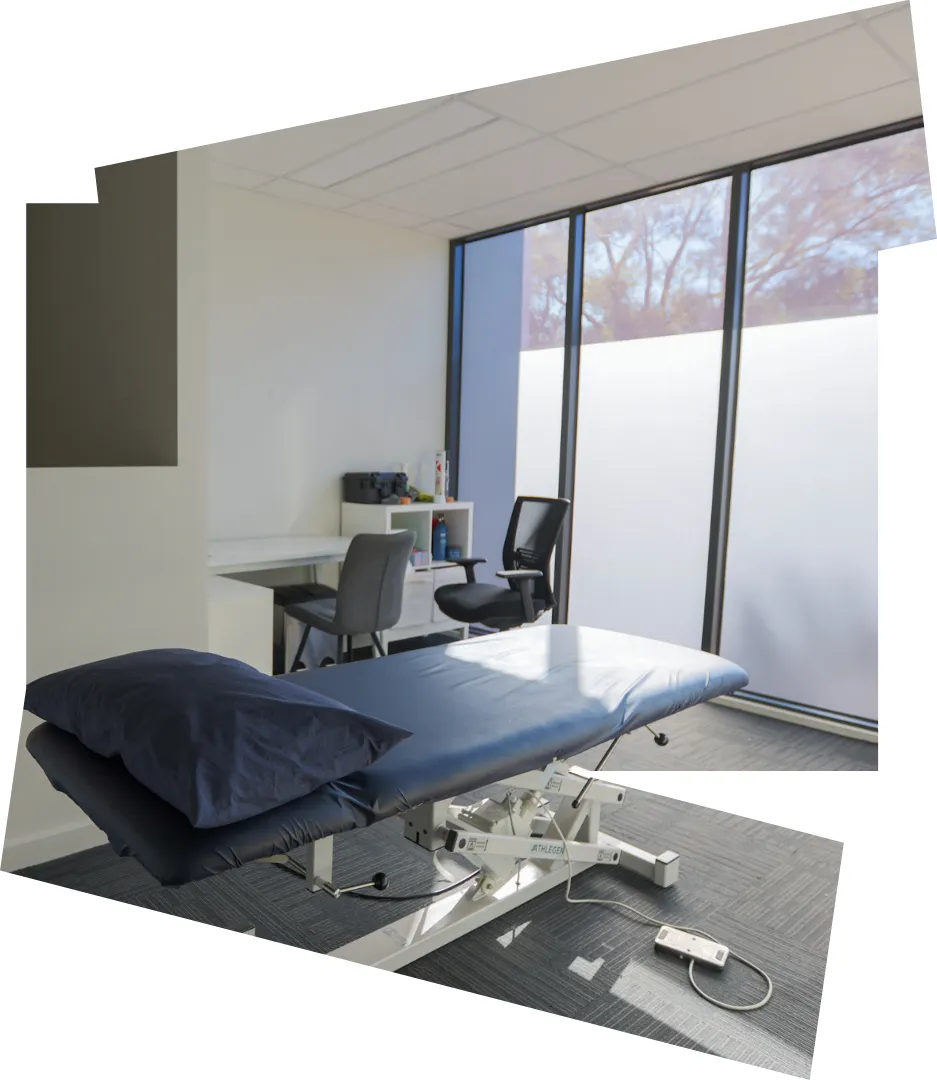
Sport Specific Injury Management & Prevention

03
Concussion Clinic
Keeping Your Brain Safe With Up To Revolutionary Concussion Care
01
Athlete Performance Program
High Performance Training Throughout Your Entire Season.
02
Sports Physio
Sport Specific Injury Management & Prevention
03
Concussion Clinic
Keeping Your Brain Safe With Up To Revolutionary Concussion Care
Performance is for all of us.
We offer comprehensive coaching, team support, and science-backed tools to enhance every facet of life for all those we serve.
250+
5 Star Google Reviews
5,000+
Athletes Coached
15+
Professional Athletes
Pivot Sports Performance
Coaches prepare you and your teams for workplace success.
With our experts and your commitment, athletes at our Bundoora & Ringwood facilities will excel in sports performance.
Testimonial
Here's What People Are Saying


Blogs
Latest and Greatest
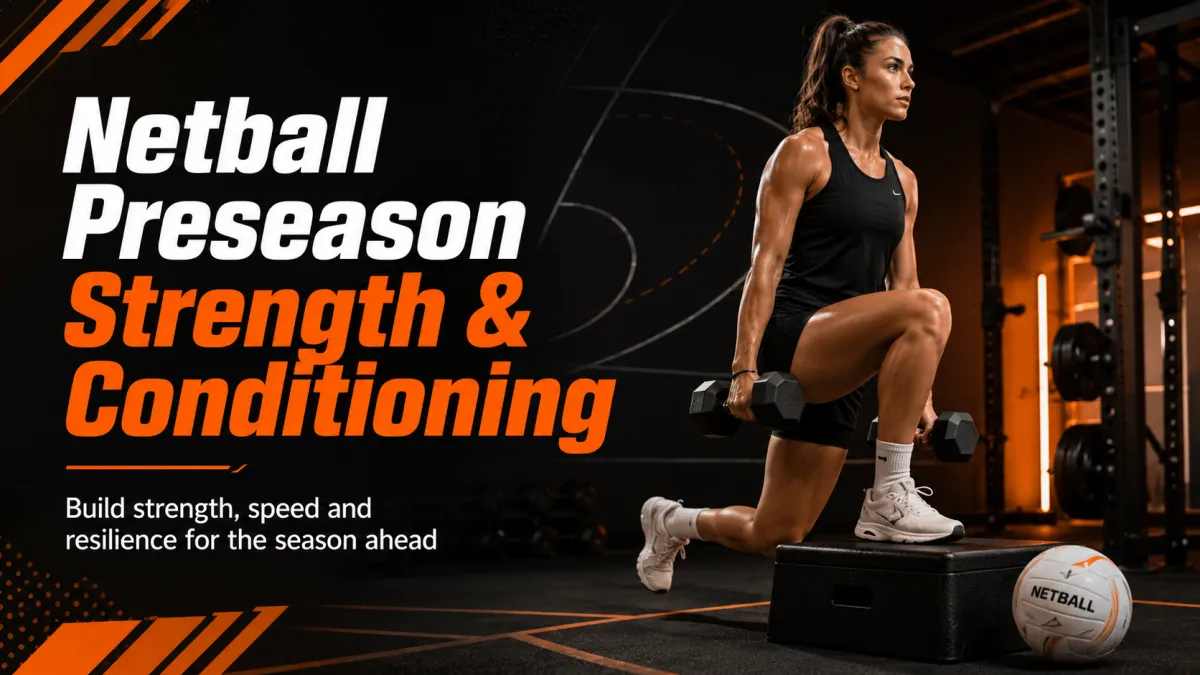
Netball Preseason Strength & Conditioning Melbourne | Pivot Sports Performance
Netball Preseason Training Should Be More Than Getting Fit
The start of netball season always seems to arrive quickly.
Trials begin.
Team training starts.
Running volume increases.
Practice matches appear on the calendar.
And suddenly players are expected to sprint, jump, land, change direction and repeat high-intensity efforts for an entire game.
The problem is that many netballers enter preseason thinking preparation simply means getting fitter.
It doesn't.
A good netball preseason should prepare your body for everything the game is going to ask of it.
That means developing:
Lower body strength
Acceleration
Speed
Change of direction ability
Deceleration
Jumping and landing capacity
Repeat-effort fitness
Calf and ankle strength
Knee control
Sport-specific conditioning
At Pivot Sports Performance, our goal isn't simply to make netballers tired.
We want to build stronger, faster and more resilient athletes who are physically prepared for the demands of the season ahead.
What Are the Physical Demands of Netball?
Netball is sometimes underestimated as a physical sport.
But watch a high-level game closely and you will see repeated explosive movements throughout every quarter.
Players need to accelerate over short distances, stop rapidly, jump, land, reposition, change direction and immediately accelerate again.
Different positions experience slightly different demands, but qualities such as acceleration, deceleration, strength, landing ability and repeat-effort capacity are important across the court.
That is why a netball preseason program should look very different from simply going for a few runs each week.
Your conditioning needs to prepare you to play netball, not just run continuously.
1. Build Strength Before the Season Starts
Strength is one of the foundations of athletic performance.
A stronger athlete has greater potential to produce force into the ground when accelerating, jumping and changing direction.
But strength also helps the athlete tolerate the forces created when they have to stop.
That second part is particularly important in netball.
Every landing, cut and sudden stop creates forces that your muscles and tendons need to absorb.
A well-designed preseason strength program should therefore develop the entire lower body.
This could include exercises targeting:
Quadriceps
Hamstrings
Glutes
Calves
Adductors
Trunk
Single-leg strength
Exercises such as squats, split squats, Romanian deadlifts, step-ups, calf raises and other single-leg exercises can form part of the program depending on the individual athlete.
For younger netballers, properly supervised resistance training can also be an important part of long-term athletic development.
Read more: Why Strength Training Is One of the Best Injury Prevention Tools for Young Athletes.
2. Don't Forget Calf and Ankle Strength
Netball places enormous repeated demands through the ankle and calf complex.
Think about how often a player:
Accelerates
Pushes off one leg
Changes direction
Jumps
Lands
Repositions onto their toes
Your calves are involved in almost all of these actions.
Yet calf training is often limited to a couple of sets of calf raises at the end of a gym session.
For many netball athletes, we want to build both calf strength and the ability to repeatedly produce force.
This may involve a combination of:
Straight-knee calf raises
Bent-knee calf raises
Single-leg calf work
Isometric calf exercises
Pogos and low-level plyometrics
Progressive jumping
Hopping
Higher-speed plyometric exercises
This becomes especially important for athletes with a history of ankle sprains.
If ankle injuries have interrupted previous seasons, read our guide to ankle sprain rehabilitation and return to sport.
3. Learn to Land Properly
Jumping gets a lot of attention in sport.
Landing deserves just as much.
Netball involves frequent single and double-leg landings, often while reaching for the ball, under pressure from an opponent or preparing to immediately change direction.
The ability to control these landings should be deliberately trained.
Netball Australia's KNEE Program specifically incorporates strength, balance, landing and agility exercises into an on-court warm-up designed to improve movement efficiency and reduce injury risk.
Research in junior female netball players has also found that neuromuscular training can improve landing biomechanics associated with ACL injury risk.
Preseason gives athletes time to develop these skills before competition intensity increases.
Training might progress from:
Double-leg landing
to
Single-leg landing
to
Jump and land
to
Land and change direction
to
Reactive and sport-specific landing tasks.
Eventually, landing shouldn't exist as an isolated drill.
It should become part of how the athlete naturally moves.
4. Train Deceleration, Not Just Acceleration
Everyone wants to become faster.
Far fewer athletes spend enough time learning how to stop.
But in netball, the ability to decelerate effectively can be just as important as acceleration.
Every time you sprint towards a contest or lead into space, you eventually need to absorb that momentum.
Poor deceleration ability can result in:
Slower changes of direction
Poor body positioning
Longer stopping distances
Reduced ability to reposition quickly
Greater mechanical stress through the lower limb
That is why preseason training should progressively expose athletes to faster stopping movements.
A progression may include:
Controlled deceleration drills
Faster linear deceleration
Lateral stopping
Planned change of direction
Reactive agility
Netball-specific movement under pressure
Good agility isn't simply about moving your feet quickly.
It is about being able to produce force, absorb force and redirect force efficiently.
5. Build Acceleration and Speed
Netball athletes rarely get the opportunity to reach maximum sprinting speed during a match.
But that doesn't mean speed training is irrelevant.
Being faster improves the player's ability to create separation, close space and get into position.
And because most netball movements occur over relatively short distances, acceleration becomes particularly valuable.
Players can train acceleration through short, high-quality efforts such as:
5 metre accelerations
10 metre accelerations
Different starting positions
Lateral-to-linear acceleration
Reactive accelerations
Partner or ball-based drills
These should be performed with adequate recovery.
If the objective is speed, the goal is quality, not exhaustion.
Twenty metres of genuinely fast sprinting with good recovery is very different from turning a speed session into another conditioning session.
6. Include Plyometric Training
Plyometrics are exercises involving rapid force production and the stretch-shortening cycle.
In practical terms, that means training athletes to become better at movements such as:
Jumping
Hopping
Bounding
Rebounding
Landing
Quickly producing force
For netballers, plyometrics can help bridge the gap between gym strength and athletic movement.
A preseason progression might start with simple pogo jumps and landing drills before progressing towards:
Repeated jumps
Lateral hops
Single-leg hops
Bounds
Drop landings
Reactive jumps
Change-of-direction combinations
Plyometric training shouldn't simply involve completing hundreds of jumps.
Like sprint training, quality matters.
The volume and difficulty should match the athlete's training history, strength and current capacity.
7. Conditioning Should Look Like Netball
One of the biggest mistakes we see during preseason is using running fitness as the only measure of conditioning.
Long continuous running can improve aerobic fitness.
But netball isn't a continuous running sport.
Players repeatedly alternate between movement and recovery while accelerating, stopping, jumping and changing direction.
That means preseason conditioning should gradually become more specific as

Download Your
High Performance Hacks Here

Do you like the look of working with us?
Contact Us
We’d love to hear from you. We consult for individual athletes and sports teams. Tell us what you’re looking for, and we’ll guide you to the services that are right for you (even if that's not with us!).



Bundoora Location
23-25 Clements Avenue, Bundoora VIC 3083
Ringwood Location
Unit 1/7 Oban Rd, Ringwood VIC 3134
Bundoora Location
29 Clements Ave, Bundoora VIC 3083
Ringwood Location
Unit 1/7 Oban Road, Ringwood, 3134
Website & Marketing Powered By Gymini